From a Fragment of the USSR to an Integral Part of Europe and Its Shield: Ukraine’s Journey Over 35 Years
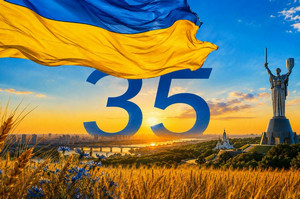
On August 24, Ukraine celebrated the 35th anniversary of its Independence. The country has endured despite the war unleashed by Russia back in 2014 – initially as a “hybrid” war, and since 2022, as an open conflict;
through this war, Moscow is attempting to revive the Russian Empire, while Ukraine, in this confrontation, is striving to secure its independence and preserve itself as a nation. We have already achieved this, even though we have not yet defeated the enemy;
despite the challenges, Ukraine has grown stronger, become part of Europe, and changed the world. Russia, meanwhile, has lost its chance to be a part of it as a strong and free state and has become a pariah – a satellite of the PRC;
35 years is not a jubilee yet, but it is appropriate to take stock. We can also say with confidence that Ukraine has stood firm and will live.
In the 35 years since the collapse of the Soviet Union, Ukraine has navigated the difficult path of establishing itself as a new independent state. Much has already been said about this, but let’s outline only the main stages. They are undeniable. Ukraine has become a sovereign state, defended its independence with arms against Moscow’s encroachments, and – although the war is still raging – has become an integral part of Europe, occupying a key place in the European security system and undermining Russia’s power as the spearhead of evil, which has changed the world order. Let’s give these issues a closer look.
Ukraine as Part of the Soviet Union Within Russia’s Sphere of Influence
The early years of Ukraine’s independence were marked by the active development of its national-democratic processes and its aspiration to become part of the European and, more broadly, Western community. At the same time, in many respects, it remained part of the post-Soviet space without a clearly defined course, which fluctuated in line with shifts in the positions of its government.
Furthermore, Ukraine was economically dependent on Russia, primarily in the energy sector. Plus, Ukrainian society lacked unity. Many did not accept Ukraine’s course toward Europe, continuing to rely on Russia. Thus, Russia had powerful levers of influence over Ukraine. It took full advantage of this situation and gradually absorbed Ukraine economically and politically. Russian businesses actively bought up Ukraine’s economic assets, or Russia seized them ostensibly to settle debts. At the same time, the Kremlin consistently brought the Ukrainian government under its control by installing its own proxies within it.
Ukraine’s security forces, including its armed forces, were also remnants of the former USSR. They were filled with Russians who did not recognize the Ukrainian state, and some of them even acted against it on the orders of Russian intelligence agencies. In fact, our country’s security apparatus was not combat-ready and would have been unable to defend the country in case of Russian aggression.
However, by the early 2000s, Russia had nearly achieved its goals without military intervention. Ukraine had effectively fallen within its sphere of influence and had even given up its policy of European and Euro-Atlantic integration in favor of a so-called “multi-vector” course. In reality, though, this meant returning our state to the protectorate of the Russian Federation. The West largely went along with this. It was disappointed with Ukraine and favored Russia, which was of greater interest to it due to its oil, gas, and other natural resources. Ukraine, meanwhile, was pushed into the background.
The “Orange Revolution” and Ukraine’s Transition into the “Gray Zone” Between the West and Russia
The situation changed with the “Orange Revolution” in Ukraine in the winter of 2004–2005. This was the Ukrainians’ response to Moscow’s actions aimed at bringing our state under complete control by rigging the presidential election and installing its own puppets in the highest offices of government. The revolution triumphed, which was an inevitable consequence of the growth of Ukrainians’ national consciousness and their desire for freedom and independence from Russia, which by that time had already become a breeding ground and source of corruption, totalitarianism, and neo-imperialism.
As a result of that victory, Ukraine came under the leadership of national-democratic forces. They chose a clear path toward our country’s accession to the EU and NATO. In response, Russia launched a large-scale “hybrid” war against Ukraine, aiming to create conditions for the removal of the Ukrainian leadership and to restore pro-Russian rule by massively destabilizing the situation in the country. To this end, methods of information, trade, and gas warfare were widely employed.
Western countries and international organizations finally realized what Russia was all about and sided with Ukraine. However, they avoided confrontation with Russia, so their assistance to Ukraine was not decisive. For instance, the EU and NATO postponed defining the prospects for Ukraine’s European and Euro-Atlantic integration, which could have helped it in the conflict. Nevertheless, the USA and Europe helped Ukraine hold its ground. It has emerged from Russia’s sphere of total influence and drawn closer to Europe, although it has not yet become part of it. In other words, it found itself in a “gray zone” between the West and Russia.
“The Revolution of Dignity”, Russia’s First Attack on Ukraine, and Ukraine’s Integration into Europe
However, Russia still managed to exact revenge and return its proxies to power in Ukraine. This happened following the 2010 presidential election. But Russians’ plans fell apart after that. They turned their backs on the EU and NATO and tried to destroy the national identity in Ukraine, bringing it back into their sphere of influence. However, the “Revolution of Dignity” in Ukraine in the winter of 2013–2014 stood in their way.
National-democratic forces returned to power in our country. This time, Russia reacted with greater defiance and harshness. A new “hybrid” operation, “Russian Spring”, was launched, aimed at the disintegration of Ukraine. In this way, the Russians hoped to bring Ukrainian territory, along with its economic assets and resources, under their control. At the same time, the issue of Ukraine’s accession to the EU and NATO would be permanently removed from the agenda. But Moscow miscalculated. Although the post-revolutionary chaos in Ukraine did allow Russia to occupy Crimea and provoke a conflict in the Donbas, the Armed Forces of Ukraine managed to regain their effectiveness, thwarted Russian attempts to stir up unrest in other regions of the country, and blocked the advance of Russian units beyond the occupied territories of the Donbas.
Moscow’s actions did not cause Ukraine to disintegrate; on the contrary, they served as a catalyst for uniting Ukrainian society around the idea of resisting the Russian aggressor. At the same time, they provided a powerful impetus to Ukraine’s European and Euro-Atlantic integration processes. The United States and Europe viewed Russia’s attack on Ukraine as a threat to their own security. They did not put the issue of granting Ukraine full membership back on the agenda, but they sided with Ukraine and began providing assistance in countering the Russian Federation. At the same time, pressure began to mount on the RF in the form of sanctions.
Ukraine and the EU signed agreements on association, the creation of a free trade zone, and a visa-free regime, and implemented them in practice. Meanwhile, the North Atlantic Treaty Organization (NATO) approved a series of military-technical support programs for Ukraine, which were subsequently implemented. All of this enabled Ukraine to break free from its economic dependence on Russia and significantly strengthen its defenses. In doing so, Ukraine emerged from the “gray zone” between the West and Russia and began to become part of Europe.
Russia’s Full-Scale War Against Ukraine, the Military Response to the Aggressor, and the Turning Point in the Situation
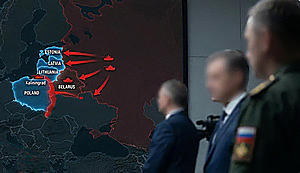
The process of Ukraine’s transformation into a fully-fledged European state has become irreversible. As a result, Moscow has begun to lose both its ability to control Ukraine and the prospect of recreating a new Russian empire. That is precisely why the Kremlin decided to invade Ukraine and regain control over it by force, just as the USSR had done with Hungary in 1956, Czechoslovakia in 1968, and Afghanistan in 1979. However, unlike in those days, the plan was to completely eliminate Ukraine as an independent nation-state. At the same time, Moscow intended to intimidate the West and force it to recognize Russia’s sphere of influence over the former USSR, including Central and Eastern Europe and the Baltic states.
We know that Russia’s latest attack on Ukraine took place in February 2022 under the guise of a so-called “special military operation”, which, in fact, turned into a full-scale war. At first, Moscow justified the war by citing the need to “protect the Russian-speaking population” and to “demilitarize” and “denazify” Ukraine, but later the hostilities took on an openly imperialist character. Moscow planned the war as a blitzkrieg, and that is how it began. Russia managed to expand its zone of control in the Donbas and quickly seize parts of Kyiv, Chernihiv, Sumy, Kharkiv, Zaporizhzhia, Kherson, and Mykolaiv regions. But Moscow once again both overestimated its own strength and underestimated Ukraine’s ability to repel the aggressor. As a result, Moscow’s plans fell apart.
At first, Ukrainian defense forces slowed the advance of Russian troops. By April 2022, they had forced them to withdraw from northern Ukraine. Subsequently, most of Kharkiv region, Mykolaiv region, and the right bank of Kherson region were liberated. Starting in 2023, the war became protracted, marked by fierce fighting and casualties, but without any strategic shifts on the front lines. Russian troops continued to advance and seize Ukrainian territory, but were unable to achieve a large-scale breakthrough of the Ukrainian Armed Forces’ positions.
Ukraine was also unable to launch a successful counteroffensive in the summer and autumn of 2023. However, it managed to extend the war into Russia’s territory, where it had originally begun. Initially, this took the form of artillery and drone strikes on Russian military positions in regions of Russia bordering Ukraine. Later, it took the form of raids that crossed the Russian border. The largest of these was the capture of part of Kursk region in 2024–2025. And starting in 2025, Ukraine began carrying out systematic missile and drone attacks on military, military-industrial, oil, transportation, and logistics infrastructure deep within Russia.
The enemy continued to seize Ukrainian territory and has not stopped doing so. It also launches strikes across the entire territory of Ukraine, causing significant damage. This is all the more true given that most of these attacks are purely terrorist in nature and target civilians, especially during the winter months, when Ukraine’s electricity and heating infrastructure is being destroyed. The enemy is also blocking Ukraine’s seaports, burning down warehouses, and striking the railways, thereby destroying our industry. However, in 2026, Ukraine managed to turn the tide in its favor. The pace of the Russian troops’ advance has slowed down significantly. Ukraine is liberating more of its territory than Russia is able to capture. In the summer of 2026, Ukraine effectively blockaded Crimea, which lost its significance as a staging ground for Russian troops and the operational rear of their forces in the southern parts of Kherson and Zaporizhzhia regions.
At the same time, the Special Operations Forces’ missile and drone strikes against Russian oil refineries, warehouses of major companies, and Russian Black Sea and Baltic ports, tankers, and dry cargo ships have proven highly effective. This triggered a fuel and logistics crisis for the enemy and significantly limited its ability to export oil and grain by sea. This has served as a powerful complement to Western sanctions against Russia, which have already depleted its economy and are even pushing it to the brink of disaster.
Partnership-Based Support for Ukraine As de Facto Recognition of Its Place in the Western World
Our country’s Defense Forces play a key role in ensuring Ukraine’s ability to counter Russia. They held back the enemy since 2022 with minimal support from Western partners. This is precisely what confirms that Ukraine has truly become a sovereign state. However, without external support, it would have been much more difficult for the country. Currently, arms supplies from the USA and Europe enable our country to wage war against Russia on virtually equal terms, while financial aid allows Ukraine’s economy to survive even amid the massive destruction caused by the Russians. Therefore, Russia will not be able to defeat Ukraine, even with its significantly greater human resources. Furthermore, Russia is unable to hold out because, collectively, the EU and the USA surpass it nearly 20-fold in economic potential.
Thanks to our Western partners, the Armed Forces of Ukraine have undergone a significant transformation. They have completely transitioned from outdated Soviet equipment to modern Western weapons. Of the greatest importance are unmanned aerial vehicles, anti-aircraft missile systems, high-precision missile systems, tactical aircraft, armored vehicles, and long-range artillery. Most of these are superior to Russian models serving similar purposes. Ukraine manufactures some of its weapons independently, particularly UAVs. In this way, our country has demonstrated a unique ability to rapidly and flexibly ramp up military production amid wartime conditions and despite the enemy’s overwhelming superiority in the early stages of the conflict. We are also establishing joint weapons development programs with our partners, including on their territories. This allows us to protect our production facilities from Russian strikes.
Through joint efforts, medium-range cruise missiles were developed in a short period of time. Their production is now being ramped up. The development of ballistic missiles – which neither Europe nor Ukraine previously possessed –is nearing completion. In the near future, the combined forces of Ukraine and European countries will also create an air defense system no less effective than the American Patriot air defense system. Furthermore, partners are prepared to provide Ukraine with security guarantees for the postwar period. However, Ukraine is rapidly transforming from a recipient of foreign assistance in this area into a source of security for Europe and, to a certain extent, for the United States.
All these circumstances indicate that the partners recognize Ukraine as an integral part of Europe and, more broadly, the Western world.
Ukraine As a Key Element of the New European and Euro-Atlantic Security System
Today, Ukraine is becoming one of the key elements of the new European and Euro-Atlantic security system. With the most powerful armed forces in Europe, backed by real combat experience, it is one of the main factors deterring Russia’s military expansion toward Europe. In other words, Ukraine serves as Europe’s front line – in the form of the EU and the European component of NATO – on its southeastern flank and in the Black Sea region. In turn, Europe acts as Ukraine’s operational and strategic rear and provides it with support.
At the same time, Ukraine is sharing with European countries and NATO as a whole its combat experience in modern warfare, particularly regarding countering unmanned aerial vehicles (UAVs) and their combat use. Currently, training missions involving Ukraine are underway in Poland and Denmark.
Ukraine has also assisted the USA and its allies in the Middle East in countering Iranian UAVs. In doing so, it has demonstrated to America and the world that it stands with them. And Ukraine’s role as a shield for NATO on its southeastern flank allows the USA to reduce its military presence there and redirect military resources toward containing China in the Asia-Pacific region.
Our Country Is Changing the World
Ukraine’s fierce resistance not only prevented the Russian Empire from reviving and rising to the status of a major world power, but also undermined and significantly weakened its international standing. The United States and China openly do not regard Russia as a regional power on par with themselves and are unwilling to divide the world with it. They divide it among themselves, as a result of which it has once again become bipolar – but now without Russia.
The world has ceased to fear Russia and its army, which were unable to cope with the comparatively weaker Ukraine – especially when Russia seeks to threaten others. This is precisely what is demonstrated by the aid provided to Ukraine by the USA and Europe, including the supply of long-range weapons. Unlike in the early years of the war, no one now opposes Ukrainian strikes on Russian territory or fears an escalation of hostilities. Moscow itself no longer has the forces to do so. And it won’t have enough of them, even if it carries out a mobilization. All the more so because, in modern warfare, numerical superiority is no longer decisive.
Europe remains wary of an attack from Russia, which is why it is actively developing its defense capabilities. By 2030, these capabilities are expected to be fully prepared to repel Russia’s aggression alongside Ukraine, leaving Russia with no chance of success.
So, over the course of 35 years of Independence, Ukraine has gone from being a fragment of the Soviet Union with an uncertain future to an integral part of Europe and its shield on the eastern front. At this, it has become one of the centers of power in Europe that cannot be ignored.
Ukraine has managed to break free from Russia’s sphere of influence and repulse its hostile attacks. The war is still ongoing, but our country is confidently turning the tide in its favor. At the same time, the EU’s and NATO’s relations with Ukraine have reached a qualitatively new level, as Ukraine has become of fundamental importance to them. Today, Ukraine is a key component of the new European and Euro-Atlantic security system, and with its powerful army, it is deterring Russia from attacking Europe. In other words, Ukraine is transforming from a recipient of aid into a source of security for Europe. At this, Ukraine’s fierce resistance is exhausting Russian forces and thwarting Moscow’s plans to transform Russia into a major world power. Russia has overextended itself, and the world – now led by the USA and China – has once again become bipolar.
Oleh Bereziuk, Yurii Mykhailenko
Institute for Global Politics
Collage Instagram