A Political Scandal Between Poland and Ukraine. Reasons, Consequences, and Further Development of the Situation
Relations between Poland and Ukraine have deteriorated due to a political scandal instigated by Polish right-wing forces seeking to boost their poll numbers ahead of the upcoming parliamentary elections. Ukraine and Poland are now trying to mend their ties, but this is no easy task, as Polish right-wing forces are determined to win the elections by playing on the nationalist sentiments of Polish citizens. Today, this scandal is already having negative consequences for both Ukraine and Poland. We can only hope that common sense will prevail in Polish society and that the situation will ultimately be resolved.
Since Russia’s first, in 2014, attack on Ukraine Poland has remained one of our key partners. It is considered a champion of Ukraine’s interests within NATO and the EU, serves as a hub for the transit of weapons for the needs of the Defence Forces of Ukraine, participates in programs to support the Ukrainian economy, and, not least, provides shelter to Ukrainian refugees.
In turn, Ukraine is one of the main forces deterring Russia from attacking Europe – and, consequently, Poland – by providing a buffer along the southeastern front. This allows Poland to free up its resources to address other threatening fronts. In other words, both neighboring countries need each other, which is why they are objectively considered strategic partners. At the same time, relations between Ukraine and Poland are periodically complicated by various issues. These issues harm the interests of both sides and, in some cases, directly provoke hostility. Some of these issues have a real basis, while others are artificially created by certain internal and external forces.
As far as the present is concerned, the political scandal provoked by President of Poland K. Nawrocki regarding Ukraine can be considered just such an artificial problem. As is well known, this refers to the so-called Volyn tragedy – that is, the large-scale armed conflict between Ukrainians and Poles in 1943–1944 in the regions where they lived side by side in Volyn and Halychyna. It resulted from Poland’s oppression of Ukrainians in those territories, which had become part of Poland following the collapse of the Russian Empire in 1917 and the civil war. The Ukrainians attempted to resist this oppression, to which the Poles reacted sharply.
After the German troops withdrew from what is now Western Ukraine, the Soviet Union was unable to establish full control over the region. By that time, tensions between Ukrainians and Poles had escalated into armed conflict. Thousands of civilians – both Ukrainians and Poles – were killed as a result of brutal, mutual ethnic cleansing carried out by the Polish Home Army (Armia Krajowa) and the Ukrainian Insurgent Army (UPA).
For a long time, Ukraine and Poland have had fundamental disagreements regarding the historical assessment of the Volyn tragedy. Ukraine emphasizes the mutual blame of the two warring sides, while in Poland these events are officially recognized as nothing less than “genocide” against Poles. However, Ukraine and Poland have recently agreed on the need to jointly reexamine those tragic events. Ukraine was the initiator of this process. Both Poland’s liberal and democratic forces and, by and large, its right-wing and conservative forces agreed with this. They agreed that the issue of the Volyn tragedy should be removed from the agenda as a source of conflict between Ukraine and Poland. This was considered particularly significant in the context of Russia’s full-scale invasion of Ukraine and the possibility of similar aggression against Poland.
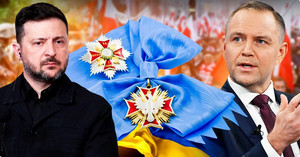
Before his election as President of Poland, K. Nawrocki had demonstrated a negative attitude to Russia as the successor to the USSR and held constructive positions regarding Ukraine. For instance, while serving as director of the Institute of National Remembrance, K. Nawrocki was one of the initiators of the dismantling of the Red Army monument in Poland. Russia regarded this as a crime and even issued an international arrest warrant for him. At the same time, he recognized Ukraine’s right to honor the UPA as heroes in the context of the war with Russia. But now K. Nawrocki has suddenly changed his position and launched an active anti-Ukrainian campaign. The trigger for this was a decree issued by Ukrainian President V. Zelenskyy in May of this year to bestow the honorary designation “in the name of the Heroes of the UPA” upon the “North” Separate Special Operations Center of the Special Operations Forces of the Armed Forces of Ukraine. He accused V. Zelenskyy of supporting the crimes of the UPA and thereby undermining relations between Poland and Ukraine. He also stripped him of the Polish Order of the White Eagle. He also gave his action an overtly propagandistic character. He called on the Polish government and patriots to unite to protect the memory of the Poles who had perished. According to his statements, this issue, along with assessments of the past, will remain key in relations between Warsaw and Kyiv.
Leaders of the main right-wing conservative opposition party, “Law and Justice” – led by former Prime Minister J. Kaczyński – expressed their support for the Polish President. Former Sejm Marshal M. Kuchciński, former Minister of National Defense M. Błaszczak, and former Minister of Foreign Affairs Z. Rau made similar statements, returning to Ukraine the orders they had previously received. They were joined by W. Kosiniak-Kamysz, Poland’s current Minister of Defense.
To amplify the impact of their actions, K. Nawrocki, together with leaders of the “Law and Justice” party, are attempting to escalate the scandal to the international level and link it to Ukraine’s plans for future EU accession. For example, they have cast doubt on Ukraine’s prospects for EU membership. At the same time, members of the “Law and Justice” Party in the European Parliament proposed a resolution to honor the memory of the “victims of the UPA genocide”. They also proposed amendments to the report on Ukraine’s path to EU membership that address the Volyn tragedy and characterize the UPA as an organization based on Nazi ideology and responsible for mass crimes against the Polish population…
Another attempt by Poland’s right-wing forces to reignite historical issues with Ukraine is expected on July 11 of this year, on the National Day of Remembrance for the Victims of the Genocide Committed by the OUN and UPA in the eastern territories of the Second Rzeczpospolita.
The reasons behind these efforts by K. Nawrocki and his allies among Poland’s right-wing forces to stir up a political scandal involving Ukraine are quite clear. Parliamentary elections are set to take place in Poland soon. Although there is still more than a year until the election, the leading political forces have already begun their campaign. The “Law and Justice” party has been the most active. It was the ruling party until the autumn of 2023 and is now in the opposition. Its main rival is the ruling liberal-democratic “Civic Coalition” party, led by Prime Minister D. Tusk. Currently, the “Law and Justice” party enjoys the support of 27–30% of voters, while the “Civic Coalition” has 39%. Right-wing conservatives are trying to shift this balance in their favor. However, the country lacks the kind of complex domestic problems that the opposition typically uses to criticize the government.
Poland’s economy is performing steadily, with GDP growth rates of 3–4% per year. The standard of living is improving. Wages are rising, and inflation is relatively low, at about 2.2% per year. In terms of purchasing power parity, Poland ranks among the top countries in the EU.
As in every country, Poland also faces internal challenges. However, these are minor, and it is practically impossible to build high-profile election campaigns around them. Therefore, most political forces, regardless of their ideological orientation, exploit the issue of external threats to Poland for their own purposes. This topic is relevant because Poland is on the front lines of the confrontation between Russia and the West. In their pre-election campaigns, both “Law and Justice” and the “Civic Coalition” are trying to convince the public that they can guarantee Poland’s security better than anyone else. But this yields them roughly the same number of votes. In other words, it is quite difficult to gain an advantage by raising this issue. This is especially true since both sides propose roughly the same approaches to strengthening the country’s defense.
Given this situation, right-wing conservatives are trying to win over voters by appealing to their nationalist sentiments. This is precisely why they are bringing up historical issues in relations between Poland and Ukraine. However, so far they have not crossed certain “red lines” or blocked aid to Ukraine. Most of their representatives emphasize support for Ukraine in its military confrontation with Russia, as this is crucial for regional security.
The far-right forces have adopted relatively harsher and more uncompromising positions. For them, anti-Ukrainian rhetoric – and the Volyn tragedy, as part of it – is one of the main ways to strengthen their political standing and win over the Polish electorate. At this, they are beginning to call for an end to or a reduction in support for Ukraine. In particular, K. Bosak, the leader of the far-right Confederation party, has begun demanding that Warsaw stop funding the Starlink satellite system for Ukraine and block its accession to the EU.
In addition to emphasizing historical issues between Poland and Ukraine, right-wing forces are not averse to exacerbating current tensions in their relations. This refers to increased competition between Ukrainian and Polish agricultural producers, as well as the negative aspects of the mass influx of Ukrainian refugees into Poland. In other words, right-wing politicians are “playing” on the interests of farmers and the everyday problems of the population. This is precisely how their creation of obstacles to Ukraine’s accession to the European Union can be interpreted. In this way, the right-wing is effectively siding with Moscow. Most likely, Moscow is funding some of them to act in its interests. After all, they hardly ever criticize Russia, even though it is Russia that has caused – and continues to cause –considerable harm to Poland.
Let’s turn the pages of history to look at past events. Take, for example, the Russian assault on Warsaw in November 1794, which went down in history as the “Prague Massacre” (the name of one of Warsaw’s suburbs, where the main events took place). At that time, up to 20,000 Poles were killed by the Russians. And as early as the spring of 1940, the Russians executed more than 20,000 Polish prisoners of war and civilians in the town of Katyn in Russia’s Smolensk region. And that’s not to mention the repression of Poles following the Soviet Union’s occupation of Poland in 1944.
The “Civic Coalition” is attempting to use the issue of historical problems in relations between Ukraine and Poland to its advantage, but it does so differently. Specifically, they counter the harsh statements and actions of K. Nawrocki and his allies from right-wing parties with a measured approach aimed at resolution rather than further escalation of the conflict. In particular, D. Tusk expressed regret over the current conflict between Poland and Ukraine. He explained that this only plays into Putin’s hands and shocks allies of Poland and Ukraine. Therefore, he called on both sides not to inflame but to calm emotions, emphasizing that the front line lies elsewhere.
Leaders of liberal and democratic forces are demonstrating their full support for Ukraine in its war with Russia. However, they still reproach the President of Ukraine for approving the well-known name of our military unit, which is associated with the UPA. This position taken by some representatives of liberal and democratic parties can be explained as follows: They are forced to respond to issues concerning the UPA; otherwise, they risk losing their public standing.
The actions of Polish right-wing forces provoked a harsh reaction from Ukraine, which was entirely to be expected. Our leadership viewed these actions by Polish politicians as an attempt to improve their pre-election standing by exacerbating Polish-Ukrainian relations. In response, the President of Ukraine declined the Polish order, without waiting for D. Tusk to approve K. Nawrocki ‘s decision. All former Presidents of Ukraine and many other politicians did the same. At this, it was stated that Ukraine must determine its own history without any external interference. The Verkhovna Rada of Ukraine reaffirmed this position when, on July 1 of this year, it adopted the Law on the “Ukrainian National Pantheon”. This document is one of the key pieces of legislation in shaping modern state policy on national memory.
The threats posed by Russia to both Poland and Ukraine will not completely ruin their bilateral relations due to their shared historical past. They will continue to be strategic partners. At the same time, the scandal has nevertheless complicated their relations. In particular, this refers to limited high-level contacts. Anti-Ukrainian sentiments are spreading in Poland, and anti-Polish sentiments are spreading in Ukraine in response. It cannot be ruled out that this is precisely what prompted the Polish leadership’s decision not to take on new financial commitments in support of Ukraine. According to D. Tusk, while Ukraine is at war with Russia, Poland, in peacetime, bears the main burden of protecting the EU’s eastern border from the Russian threat. This requires Poland to increase its defense spending. Such is the Polish logic.
Besides, the discord between Poland and Ukraine is damaging their reputations in the eyes of their allies. Western media outlets are condemning the actions of both sides, calling them inappropriate given the current situation. Based on this, they are calling on Warsaw and Kyiv to end their dispute and work together to counter Russia. For its part, Russia is using the scandal as proof of “the Ukrainian leadership’s affinity for Nazism and terrorism”. This forms the basis of a special disinformation campaign aimed at justifying Russia’s war against Ukraine, discrediting both our country and Poland, and sowing discord between them. For example, Polish elites are accused of “arming the Kyiv regime, which glorifies the murderers of Poles”. At the same time, emphasis is placed on the fact that Poland’s political forces “are themselves infected with nationalism, since they hold an anti-Russian stance.”
The far-right forces in the Czech Republic are not standing on the sidelines of these events either. They are thus attempting to strengthen their political positions within their own country. For instance, the Czech government coalition SPD (Freedom and Direct Democracy) is demanding that Ukrainian President Volodymyr Zelenskyy be stripped of the highest Czech state award – the Order of the White Lion. Their motivation is the same as that of the Polish right.
Despite the negative reaction to this state of affairs, Ukraine and Poland are trying to normalize their relations. To this end, last week Minister of Foreign Affairs of Ukraine A. Sybiha visited Warsaw and presented the Polish side with proposals for resolving the situation. It is proposed to launch consultations between the Ministries of Foreign Affairs of both countries, organize meetings of historians who are experts on World War II, and appeal to religious leaders in both countries to lend their authority to strengthen the bilateral dialogue.
In addition, Ukraine’s Ministry of Foreign Affairs has proposed honoring UPR General M. Bezruchko at the National Pantheon; in 1920, he fought alongside Polish troops to liberate Kyiv from the Bolsheviks and defended Zamość against the Soviet offensive.
The Polish side has agreed to begin a dialogue.
Of course, relations between Ukraine and Poland can be improved. However, they will still remain complex. As already noted, the countries are extremely important to one another. At the same time, problems in their relations will be unavoidable. For instance, Ukraine is a competitor to Poland, which aspires to become a leader in Central and Eastern Europe. Currently, our country is beginning to play a greater role in NATO and the EU, as it is one of the key components of the European security system. And if Ukraine wins the war against Russia, its standing in Europe and the world – as well as its international position – will become even stronger. Furthermore, if Ukraine joins the EU, it will become a powerful competitor to Poland in the European food market, particularly with regard to various types of grain. Ukraine will also surpass Poland in the production of military equipment.
Besides, there will continue to be right-wing and far-right forces in Poland that will attempt to exploit historical and contemporary issues with Ukraine for their own ends – and even to inflame them. It is precisely to these forces that I would like to remind of the essence of our shared history. Poland and Ukraine were strong only when they united in the fight against a common enemy. Let us recall that as far back as 1618, the armies of the Polish-Lithuanian Commonwealth and Ukrainian Cossack units jointly defeated Muscovy. And in 1683, the combined forces of the Holy Roman Empire and Rzeczpospolita – which included Ukrainian Cossacks – defeated the Ottoman army at Vienna, thereby halting the Turks’ conquest of Europe.
But then things did not go as hoped. In 1686, Muscovy and Rzeczpospolita finally divided Ukraine between themselves. And in 1795, Russia and Austria finished partitioning Poland.
Despite all this, Poland and Ukraine have been reborn. And Russia is once again trying to destroy them. For now, it is waging a full-scale war against Ukraine. But if Ukraine falls, Poland will be next in line to face the onslaught.
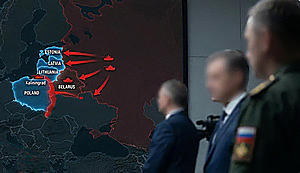
In early June of this year, the USA warned Poland that Russia was preparing an armed provocation against it. Among the main scenarios being considered are missile or drone strikes on Polish critical infrastructure, or a limited incursion from either Belarus or Kaliningrad region of the RF. The provocation could be disguised as an accident caused by a malfunction in the GPS radio navigation system, or as a forced rescue operation for a Russian helicopter.
Moscow’s goal in taking such actions is to heighten tensions in the region, demonstrate NATO’s inability to respond quickly to threats, and force the West into negotiations on Russia’s terms. Russia hopes that, under pressure from the USA, the Polish side will not open fire to destroy the target. The Kremlin plans to put forward a key demand: to halt Polish aid to Ukraine in exchange for the withdrawal of Russian troops from Polish territory. Moreover, Moscow may accuse Ukraine of the provocation.
Such a threat does indeed exist. However, even without it, Russia is already waging an active “hybrid war” against Poland. Poland’s right-wing forces must understand all of this, as they themselves are under direct threat.
Consequently, Poland’s political forces have begun preparing for the parliamentary elections scheduled for the autumn of 2027. As part of this process, right-wing parties are attempting to boost their poll numbers by appealing to Poles’ nationalist sentiments and bringing to the forefront issues related to the historical past of Poland and Ukraine. The driving force behind these efforts is Polish President K. Nawrocki, who relies on the main opposition party, “Law and Justice”. They are opposed by liberal and democratic forces in the form of the ruling “Civic Coalition” party, which believes that issues should be resolved through dialogue.
The political scandal orchestrated in Poland by right-wing forces has already strained relations between Poland and Ukraine. Besides, it is damaging the image of both countries in the eyes of their allies and is being exploited by Russia to justify its war against Ukraine, to discredit our country and Poland, and to sow discord between them. However, relations between Ukraine and Poland are bound to improve. In any case, their ambiguous nature will remain.
Yurii Ilchenko,
Institute for Global Politics