Based on the materials of the roundtable of the Institute for Global Politics “Russian Authoritarianism as a Threat to Global Security”
“In my opinion, the Russia we would like to see is a de-imperialized, deputinized, de-Sovietized, even de-Stalinized Russia, which it never was”
I am known as a Russia hawk. I don’t really like this term, but I think it is accurate. After all, the alternative to being a Russia hawk these days is, you know, not to criticize Russia’s genocidal determination to address root causes or something like that. I mean, everybody has to be a Russia hawk or a Russia realist, if you will, and be realistic about Russia, its nature, its intentions, its ambitions and its appetites.
And I have to say that I don’t have much faith, based on my experience in diplomatic initiatives, the latest ones that we see in the press and in general. The Kremlin has made it absolutely clear that it is not interested in diplomatic initiatives, and that is what our collective assessment of Russia’s intentions should be. I am sure this is true for everybody in this room. But, of course, this analysis tends to dilute the further you go to the west. And, honestly, I don’t want to make excuses for the Russian people.
This war may not be popular. People may still want Vladimir Putin to go, to leave office. But polls in Russia also show quite clearly that now that they are in this war, they might as well win it. The majority of Russians still want to win the war, to claim Ukraine as their own.
In other words, in the year 2025, a majority of the large Russian population believes that Russia should have an empire and Ukraine, amongst others, but not only Ukraine, is lesser and merits some form of subjugation. And, frankly, I know personally many Russian analysts who want Putin to go.
They want democracy in Russia. But they also want a compromise, a division of Ukraine. They still want at least Crimea. They still believe that NATO is aggressively expanding and is the culprit and is actually the root cause of all of this. So, honestly, knowing all this and having my personal experience with Russia for more than 30 years, I will be honest with you: I find it hard to trust Russians. Do you understand?. I find it hard to trust Russians And I’m not even Ukrainian. I don’t even have family ties to Ukraine. I have no skin in the game, as they say.
So why am I even here?
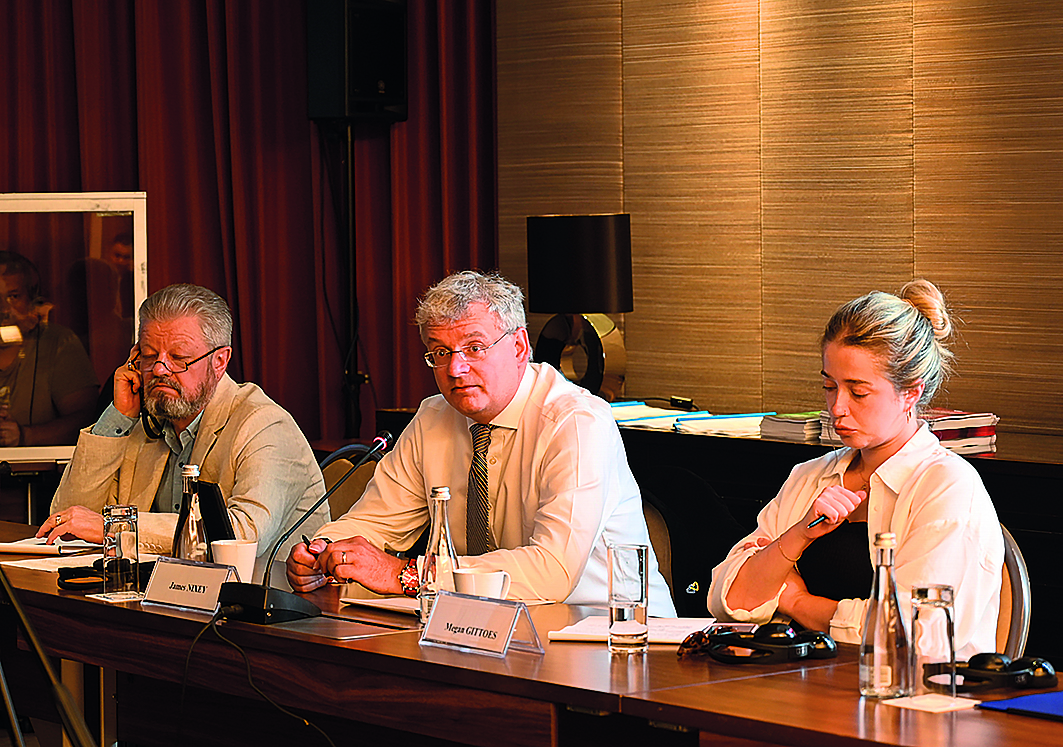
Well, if I thought that any of these Russians believed in such things, I certainly wouldn’t be here. If I thought that they believed that Russia should have colonies, that Ukrainians are lesser, that there should be some kind of compromise solution, and that Russia should not lose the war. If I thought they believed that, I wouldn’t be here. But I don’t think it’s true about the Russians here today and on the screen. And if you accept that as the truth and think about it, they are just like you and me, whether we are British or Ukrainian or whatever.
So, I think that the Russians in this room are the best representatives of Russia. Of course, they are a minority, and absolutely powerless. But they at least have the qualities that I think you Ukrainians have: bravery, insight, integrity. And one more thing that maybe you don’t have, but the Russians do, and I probably shouldn’t speak for them, but I would say that they also have shame. Shame for what their country has done and is doing.
So, when changes come to Russia (and I would not like to set a time frame, but I believe that they will come), these are the kind of Russians you will want to be working with. So, I also have to say that Russians are a key piece of the jigsaw when it comes to analyzing Russia. And I believe that it is necessary to analyze Russia endlessly. Just as we talk about rebuilding Ukraine and strengthening Ukrainian society even before the war is over. And you have seen this, for example, in Rome over the last few weeks, we can, or at least should, also talk about what kind of Russia we would like to see once Ukraine is secure and territorially whole once again, as it must be.
In my opinion, it should be a de-imperialized, de-putinized, de-Sovietized, even de-Stalinized Russia, which it never was. And again, I hope that the views on this in this room and on the screen will not differ too much. Yes, we may disagree on the size, shape and the form of the new Russia. I myself am philosophical about whether post-war Russia should retain its current shape and size, its status in the UN… Probably not. But I believe that this does not matter. I think these are urgent topics for discussion.
And I think we can do it. So, as I mentioned earlier, I just want to say that Ukraine is being raped by Russia. And I can hardly imagine what Ukrainians are going through. I don’t think I can imagine it, even though I have a lot of Ukrainian friends. I can understand why Ukrainians don’t trust Russians. So, these things need to be approached cautiously, sensitively, patiently. And I think that would be the extent of my hopes and ambitions for today.
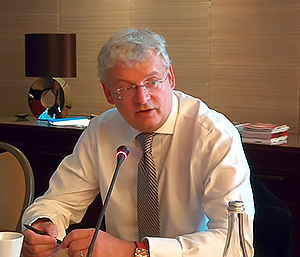
James Nixey,
analyst, former director of the Russia and Eurasia program
at Chatham House (UK)