The Collapse of the Soviet Union and Prospects for Russia’s Disintegration. A Comparative Analysis
(Part 2)
After Putin came to power in 2000, the situation in Russia underwent radical changes. He began to restore a rigid power vertical and, in general, a totalitarian regime in the country. The first of those steps was the establishment of full control over the legislative and executive branches of the Russian Federation, which gave Putin the opportunity to implement his plans.
Thus, as a result of the falsification of the parliamentary elections, the constitutional majority in the State Duma was secured by the “Yedinaya Rossia” (“United Russia”- Tranl.) party, which brought together Putin’s proteges and supporters. This allowed him to change the system of electing governors of Russian regions and territories by the local population. Since then, he has been appointing them personally. They, along with Putin’s representatives in the regions, are now members of the Federation Council.
His next step was to strengthen the country’s special services and law enforcement agencies. Priorities were given to the Federal Security Service, the FSB, the Rosgvardia, and the police. Putin expanded their rights, increased their funding, and appointed people loyal to him to leadership positions. And then the same was done with the armed forces, which were assigned the role of an instrument in the implementation of Putin’s foreign policy.
With such unlimited possibilities, Putin took the third step, namely, to politically or even physically liquidate anyone who could pose a threat to his power. To do this, he completely put an end to democracy, including the activities of the opposition and the work of independent media. Oligarchs who were independent from him were stripped of their businesses, deprived of their freedom, exiled from Russia or killed. National movements and their leaders have suffered similarly. Moscow thus prevented possible manifestations of separatism.
Putin’s fourth step was the restoration of state – but in reality, the introduction of personal – control over Russia’s leading economic sectors. In this way, he significantly expanded his opportunities for enrichment and further strengthened his power. At the same time, he provided his environment with secure access to resources and financial flows, which became a new oligarchic elite, fully fused with the government and the main pillar of his regime.
These actions of Putin’s were accompanied by a massive Russian propaganda campaign aimed at rallying the country’s population around him. It was based on the ideas of revenge for the USSR’s defeat in the Cold War, restoration of Russia as a great power, building the Russian world and giving the Russian nation superiority over all other nations. It played on the imperial and at the same time slavish mindset of Russians, which eventually developed into outright Nazism and fascism.
As part of this approach, Putin’s policy of strengthening the authoritarianism of the government in the country was justified by the need to actively counter Chechen and other terrorism, which intensified significantly in the second half of the 1990s and early 2000s. However, that terrorism, as well as the first and second Chechen wars, was the creation of Russian secret services acting in the interests of their government.
Thanks to the above-mentioned actions, Putin had indeed strengthened Russia and rallied its population around him. Russia’s international position had also strengthened, as it had taken its rightful place in the world and actively developed political and economic relations with other countries, especially the United States and Europe. At the same time, Russia was confidently emerging as the center of the post-Soviet space, with the exception of the Baltic states, Ukraine, Georgia, and Moldova.
However, in the second half of the 2000s, it exhausted the potential of its dynamic development. It began to slow down. Besides, Putin’s uncontrolled system of power was completely engulfed in corruption, which was another tangible reason for the deterioration of the Russian economy and the growth of social problems.
As a result of such trends, the Russian population began to show dissatisfaction with the Putin regime. And after a certain period of democratization, citizens began to react negatively to the restoration of totalitarianism. In turn, the decline in Putin’s credibility had created a threat of weakening his power or even losing it if fair elections were held. The activity of the Russian population in protests was increasing.
Under such circumstances, instead of actually improving the state of Russia’s economy, returning to democracy and fighting corruption, Putin followed the traditional Russian way of distracting people from internal problems and reorienting them to conflicts with other countries, which was supported by neo-imperial ideology. For example, in February 2007, during the Munich Conference on International Security, Putin announced a shift to confrontation with NATO, which he disguised as “tough defense of Russian interests” and justified by the fact that Russia had become a “besieged fortress”.
At the same time, he began to actively take full control of the former Soviet republics by military means. In August 2008, Russia attacked Georgia under the pretext of protecting the population of South Ossetia. At that time, the West had virtually ignored his actions, which unleashed Putin’s hands. Therefore, in 2014, he attacked Ukraine, captured and annexed Crimea and Donbas. And in 2022, Russia launched a full-scale war against Ukraine, which continues to this day. But this time, things went very differently than in Moscow’s previous aggressions. Contrary to his expectations, Putin failed to quickly capture Ukraine and the war he unleashed became protracted. This led to excessive losses in the Russian armed forces and required unaffordable financial and resource costs. By the autumn of 2025, Western sanctions had finally undermined the Russian economy.
Professional experts have repeatedly covered Russia’s economic problems in the media. So, there is no need to repeat them. Let us only emphasize that in today’s Russian Federation, the economic situation is once again in a crisis similar to that of the former USSR on the eve of its collapse. This fact can be used and is most likely already being used by the West to disintegrate Russia itself
We discussed the methodology of the West’s actions to disintegrate the Russian state in the previous post. Regarding the current stage, we talked about the consistent steps taken by the United States and the EU to force Putin to make concessions by strengthening sanctions against Russia. This theory has been confirmed.
After his hopes for loans from Beijing to support the Russian economy (but, in fact, to save it) failed during his visit to China on August 31-September 3, Putin did make new concessions. In particular, he agreed to the joint management of the Zaporizhzhya NPP by Russia, the United States, and Ukraine. And this is on the territory that is under Russian occupation. In addition, according to Prime Minister of Slovakia R. Fico, after his talks in the Kremlin, Putin agreed to meet with Ukrainian President V. Zelenskyy not only in Moscow but also elsewhere. That is, the scheme is working, although Russia continues active hostilities at the front and conducts massive missile and drone strikes on Ukrainian cities, as it did on the night of September 7. Therefore, we should expect the next stages of the above-mentioned US-EU approach to be implemented. The next of these may include forcing the Kremlin to return the occupied territories or parts of them to Ukraine, and then democratizing Russia, which will be a prerequisite for its collapse. In view of this, it is worth returning to the factors that seem to make this process impossible.
The main one is the strength of the vertical of power in Russia. Today, only the appearance of it remains. It has been undermined by disagreements within the top ruling elite of the Russian Federation over the continuation or end of the war, the struggle for access to financial resources in the face of the economic crisis in Russia, and massive corruption. In the article “Putin Is Losing Power. How He Is Being Removed from It”, we already gave examples of the Russian government’s direct failure to comply with Putin’s instructions, as well as how he is being misinformed. Since then, this trend has deepened even further.
And the “loyalty” of the country’s governors to Putin was demonstrated by the situation in Kursk region, when funds allocated to strengthen the border with Ukraine were stolen by local authorities. Despite the fact that it was just ordinary corruption, this fact demonstrates the inability of the federal center to really influence the activities of regional authorities, even in such critical issues as the country’s defense.
However, the true depth of the problem is demonstrated by the head of Chechnya, Kadyrov, who is supposedly Putin’s mainstay and is completely subordinate to him, but in fact serves only for money. He himself is a “local prince”, and his Chechnya is actually independent of Russia and will inevitably leave it as soon as it does not receive money.
Russian special services can also no longer be considered a reliable guarantor of Russia’s unity, as they have largely lost their power. The reason for this is the same massive corruption, as well as the low professional level of their leadership and personnel. There is more than enough evidence of this. Here are just the most illustrative examples.
On the eve of Russia’s first attack in 2014, the leadership of the Russian intelligence services promised Putin to destroy Ukraine with the subversive operation “Russian Spring”. Instead, in the most difficult situation for Ukraine, post-revolutionary chaos in the country, when its supreme power had fled, Russia was only able to seize Crimea and provoke a conflict in the Donbas. And it managed to keep it only by directly using its army against Ukrainian troops who were ready to liberate the region. The lesson was not learnt. The same thing happened again in 2022 during Russia’s full-scale attack on Ukraine. As in the first case, the leadership of the Russian secret services assured Putin that they had done everything possible to ensure Ukraine’s rapid fall, and therefore the so-called “special military operation” would not take much time, would not cause significant losses, and would not require excessive resources.
Based on such preambles, the “special military operation” was planned. Including the hope that Ukrainians would meet the Russians with flowers. Everyone knows what happened next. As well as the fact that the FSB leadership appropriated the funds allocated by the Kremlin to undermine Ukraine from within.
And that’s not all. In 2023, the FSB created the “K” Department to fight corruption. A few months later, its entire leadership was arrested for organizing a criminal group. During their activities, they collected 5 billion rubles in bribes.
It is hard to believe that such special services will be able to keep Russia from disintegrating. Rather, they will intensify it to avoid responsibility.
In its current state, the Russian armed forces will not be able to contain any real manifestations of separatism. Especially if Moscow does not have the ability to recruit contract soldiers for big money and provide them with equally significant payments. Most likely, something like the First Chechen War in 1994-1996 will happen, when Russia was forced to recognize the sovereignty of the breakaway republic and withdraw its troops from it. And then the Russian Armed Forces will suffer the fate of the Soviet army, when its personnel will begin to return to their regions without permission. Moreover, in whole “nominal units” that are currently being formed on a regional basis. In fact, this is already happening in the form of mass desertion.
The “Russian world” shows very well what Russian patriotism is about. It is limited to public chauvinism. And when it comes to actually fighting for Russia with arms in hand, most people agree to do so only for money. What else can be said when Moscow residents are completely indifferent to what is happening in Kursk or Belgorod regions, and the residents of those regions are happy to see Ukrainian strikes on Russia’s capital.
The world’s leading countries will not restrain Russia’s disintegration either. Not only does no one need it, but it has become toxic to everyone, except for rogue states like it. Even China tolerates it because it sees it as a tool to counter the West. But it is also waiting for an opportunity to take full control of its territories and natural resources. Russia accounts for only 2% of the world economy, and this makes its disappearance almost invisible. In addition, Russia has already been de facto excluded from the global energy market.
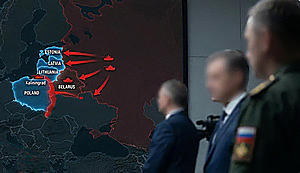
The issue of Russia’s nuclear weapons will also be resolved in the same way as it was done with the USSR’s nuclear weapons. The same applies to possible spillovers of instability to Europe. They will be contained by the defense that is now being formed on the eastern borders of NATO and the EU.
The existence of all of these problems was most clearly demonstrated by the speech of Yevgeny Prigozhin and his march on Moscow in June 2023. This event is also called a rehearsal for the anti-Putin revolution in Russia. Many Russians supported him, as shown, in particular, by the reaction of residents of Rostov-on-Don, which was posted on the Internet.
The authorities of Rostov, Voronezh, Kursk, Orel, Tula and other regions through which or near which Prigozhin’s march passed, removed themselves from their duties and fled. Putin himself fled Moscow. So did the command of the Southern Military District and local law enforcement agencies in the regions. In other words, the vertical of Russian power and the security forces did not work. And the rebellion itself and the situation around it completely refuted the assertion that Russians would suffer all their troubles and never oppose the government.
Prigozhin’s rebellion ended in failure, which was the result of his loss of determination to achieve his goals and the fact that he believed Putin, which he should never have done. But the problems remained…
So, Russia’s prospects are extremely bleak. At best, it will return to the situation of the 1900s, and at worst, it will cease to exist as a single state or finally turn into a Chinese province. This will be the main and most positive event for the world in the twenty-first century.
Yurii Ilchenko,
Institute for Global Politics
(Image generated by neural network)