Russia Counts on Russians: Putin’s Siloviki in the Sontext of “Ethnic Cleansing”
In recent years, the security apparatus of the Russian Federation has been undergoing a profound transformation, the central element of which is the systematic Russification of its security structures, special services included. This process marks a departure from the multi-ethnic heritage of the Soviet services and is aimed at building a new, ethnically homogeneous security elite.
According to experts at the Center for European Policy Analysis, Russia’s special services are undergoing a deliberate “purge” of nonethnic Russians. This is a radical rejection of the practice of Stalin and his successors, who used the experience and networks of ethnic minorities – Jews, Armenians, Georgians and Latvians – in their security structures, significantly increasing their operational effectiveness.
At one time, there were many Latvians among the Chekists and commanders of the Red Army [1]. Georgian Lavrenty Beria was the chief of the NKVD, and Jewish officers held senior analytical and operational positions in the 1920s and 1930s [2].
Today, it is hard to find Tatars or Chuvash among the leaders of key FSB units, despite the fact that they are the second and third largest ethnic groups in Russia. Until recently, ethnic Ukrainians held important positions, including in the 5th Service responsible for operations in Ukraine [3]. However, after wrong predictions of a full-scale invasion, they were removed and replaced by Russians.
These changes are not limited to the FSB, but cover the entire security apparatus. According to an analysis by the British think tank Human Security Centre, even before the war, Russians were the nationality of choice for covert operations. After 2022, the mass expulsion of Russian intelligence officers under diplomatic cover from Western countries [4] forced the Kremlin to increase the emphasis on the activities of its agents, which eventually led to a sharp shift to recruiting foreigners (in particular, through social media) to do “dirty work” in Russia’s interests.
In parallel with the Russification of the security apparatus elite, the Russian system has demonstrated a growing tendency to treat ethnic minorities as peripheral resources used primarily in military mobilization. Ethnic groups such as Tatars, Buryats, Yakuts, Tuvans, and people from the North Caucasus are overrepresented among conscripts and units sent to the front. This demonstrates that minorities play the role of “cannon fodder” rather than part of the decision-making elite. The intensive conscription of representatives of these groups for military service is instrumental and does not provide for their real integration into the state’s security structures.
Ethnic selection is not limited to law enforcement agencies; it is also present in the civilian sphere. Both Russian state institutions and private entities are increasingly formulating discriminatory requirements related to appearance and ethnicity in tender documents and contracts. For example, job advertisements and service contracts now contain clauses requiring a so-called Slavic appearance or excluding people of “Caucasian origin”. According to the “Memorial” Human Rights Center, this phenomenon has become part of everyday administrative and social practice, and ethnic profiling has become the norm.
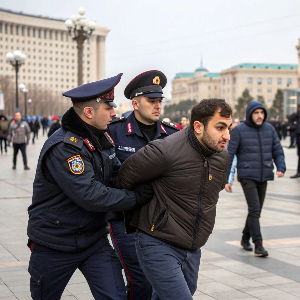
Racism and xenophobia in Russia are manifested not only in personnel policy, but also in public places and government rhetoric. There has been an increase in the number of physical and verbal attacks on non-Slavic people. Instead of counteracting these phenomena, the state reinforces them, in particular through statements by officials. An example is the statement by a representative of the Ministry of Internal Affairs about the need to “lighten Moscow region” which was widely criticized and perceived as racist [5]. In the context of war and rising nationalism, this practice becomes institutionalized, making ethnic profiling an acceptable element of the functioning of the state and the public sector.
The systemic nature of ethnic hierarchies in the Russian security apparatus is also confirmed by studies related to the army. An article published in the International Journal of Intelligence and Counterintelligence points to clear differences in the distribution and opportunities for promotion between Russians and members of ethnic minorities. Russians dominate the central structures and elite units, while representatives of peripheral groups are overrepresented in the frontline units and among the conscripts sent to the front.
The full-scale invasion of Ukraine has demonstrated how deeply rooted ethnic hierarchies affect the structure of the army. According to experts from the American think tank Institute on Global Conflict and Cooperation, the RF’s Armed Forces have a multi-level ethnic system that determines access to command positions and the status of certain national groups.
At the top of this hierarchy are Russians and Eastern Slavs (ethnic Belarusians and Ukrainians), who are considered the “state-building nation” and dominate the officer corps and command structures. Below them are groups considered loyal and “useful”, such as Tatars, Armenians, Georgians, and Jews, who have historically held relatively high positions, although they have faced obstacles to accessing the highest levels of the military hierarchy.
The next levels are occupied by minorities from Central Asia and Siberia, who are subject to negative stereotypes about their loyalty and competence. Similar trust ratings already existed in the Red Army during World War II, as evidenced by declassified Soviet documents.
An analysis of the Eastern Military District’s personnel data for 2017, which contain more than 120,000 names, allowed researchers to statistically reconstruct this structure. The results showed that representatives of groups such as Buryats and Yakuts are much less likely to be promoted to sergeant and officer positions than their Slavic colleagues.
Experts refer to these communities as “category D” – groups at the bottom of the military hierarchy, marginalized in promotion and limited in trust. At the same time, members of these groups make up a significant portion of the contract soldiers and conscripts sent to the front. For many, military service is a way to improve their economic situation or an attempt to gain recognition in a society that treats them as “other”. This mechanism is typical of imperial states, where minorities often struggle to prove their loyalty to the state, which at the same time prolongs their subordinate position. This ethnic hierarchy is stable and institutionalized. The structure mentioned above reflects Soviet logic from the 1940s, indicating that it is not the result of prolonged wartime conditions, but rather part of the deeply entrenched social and organizational order of the Russian Federation.
The ethnic policy of the Russian authorities is exacerbated by a deep demographic crisis that has accelerated with the war against Ukraine. According to Rosstat data for 2021, ethnic Russians accounted for only 72 % of the population, by 6 million fewer than in 2010 [6]. As demographer Alexei Raksha emphasized in an interview with The Moscow Times, the authorities refrained from publishing detailed demographic data in 2025, which is “a clear signal of political panic over the demographic catastrophe”. Besides, in 2024, the number of deaths exceeded the number of births by 600,000, while the fertility rate declined to 1.41, the lowest level in more than 200 years.
Military mobilization has put an additional burden on regions populated by minorities. For example, Dagestan exceeded its conscription quotas by 200 %, and Buryatia and Tuva, which previously had the highest birth rates in Russia, suffered disproportionately high human losses, threatening a long-term decline in the population of these communities.
Against the background of the Russification process, the Kadyrov clan plays a special role, being the exception that proves the rule. Head of the republic, Ramzan Kadyrov, has created a semi-autonomous law enforcement apparatus that is formally subordinated to Moscow, but in reality functions as his personal guard. Thus, the number of units under the control of this local prince has grown from seven to almost twenty, including two new Rosgvardia regiments and a few units formally subordinated to the RF’s Ministry of Defense.
Another element in the strengthening of the clan’s position was the appointment in April 2025 of 18-year-old Adam Kadyrov, Ramzan’s son, as Secretary of the Chechen Security Council. This was his fourth official position since 2023, which observers saw as a dynastic consolidation of the family’s influence in the region’s security structures. Experts believe that Ramzan Kadyrov’s position stems not from the state’s inclusive policy toward minorities, but from personal loyalty between the Chechen leader and the Kremlin.
Among the top leadership of the Russian security apparatus, ethnic exceptions are few and far between. The most famous is the case of Sergei Shoigu, a Tuvan by birth, who for more than a decade was the only non-Russian among the heads of the security ministries. At the “secondary” level of the elite is, among others, the Tatar Rashid Nurgaliyev, appointed in February 2023 as the 1st Deputy Secretary of the Security Council of the Russian Federation [7]. However, these are exceptional cases that again confirm the dominant position of Russians.
The strategy of Russification of the security apparatus has significant structural consequences. Firstly, it limits the state’s ability to control multi-ethnic regions by depriving them of local knowledge and social networks. Secondly, it marginalizes minorities and increases their alienation, which in the long run can reinforce centrifugal tendencies. Thirdly, the concentration of power in the hands of a narrow, ethnically homogeneous elite weakens the flexibility and resilience of the security system in times of demographic and military crises. According to experts from the American Jamestown Foundation, the privileged position of Ramzan Kadyrov’s structures has already led to conflicts over the distribution of powers with the FSB, which has revealed tensions in the regional law enforcement apparatus [8].
The Russification of Russia’s law enforcement structures is not just a personal or symbolic problem. It represents a profound structural change that redefines the functioning of the state and its ability to control a diverse society in the face of a deepening demographic crisis and a prolonged war. From an ideological and institutional perspective, this process can be interpreted as a manifestation of the transition to the “Great Russian” idea, a model of the state in which Russians are perceived as the basis of political order and security, while ethnic minorities play subordinate and peripheral roles. This type of ethnic centralization is in line with the long-term trend of redefining Russian state identity from a formally federal structure to a de facto ethnically homogeneous center of power.
Volodymyr Palyvoda
expert in international relations
(Image generated by neural network)
Notes:
[1] As of September 1918, among the staff of the All-Russian Emergency Commission (ChK), Latvians accounted for 35.8 %, Poles – for 6.3 %, and Jews – for 3.7 %. With the expansion of the apparatus, the ethnic composition of the leadership was changing. As of November 1923, the composition of the leadership of the United State Political Directorate GPU – the successor to the ChK) was as follows: 56.3 % – Russians, 15.7 – % Jews, 12.5 % –Latvians, and 10.4 % – Poles. As of 1918, more than 25 thousand so-called “Red Latvian Riflemen” served in the army of Soviet Russia. They played an important role in the Civil War and the establishment of the Bolshevik rule.
[2] As head of the NKVD, Lavrenty Beria initially tried to rely on his former colleagues from Georgia. As a result, the share of Georgians in the agency’s leadership increased from 3.33 % as of September 1938 to 6.98 % as of January 1940.
[3] In 2009-2024, the 5th Service (Operational Information and International Relations Service) of the FSB of the RF was headed by Colonel-General Sergei Orestovich Beseda. His deputy head of the International Cooperation Directorate until 2024 was Colonel General Aleksey Fedorovich Kuziura, a native of Chernihiv region.
[4] Between January 2022 and October 2023, more than 670 Russian diplomats were expelled from Western countries, most of whom were career officers of the Russian Foreign Intelligence Service and Military Intelligence. This is more than the total for the previous 20 years.
[5] In July 2024, at a meeting of the board of the Main Directorate of the Ministry of Internal Affairs for Moscow Region, its head, Lieutenant General of Police Viktor Paukov, set a task to “make lighter the Moscow region so that it is not blackened by foreign citizens”. He pointed out that this task was under special control of the President and the Minister of Internal Affairs.
[6] According to the 2021 census, more than 190 ethnic groups lived in Russia. Out of 147.2 million inhabitants, Russians accounted for 71.7 % of the total population (almost 106 million people).
[7] Army General Rashid Nurgaliyev, a KGB officer since 1981. In 1992-1994, his boss was the Minister of Security of Karelia Nikolai Patrushev, who later became the Director of the FSB and promoted the career of his subordinate. In 2004-2012, Rashid Nurgaliyev was the RF’s Minister of Internal Affairs, and in 2012-2023 he was the Deputy Secretary of the Russian Security Council (the Deputy of the same Nikolai Patrushev, a representative of the Leningrad Chekist clan on whom Vladimir Putin relies).
[8] The Kremlin’s confidence in Ramzan Kadyrov is not unlimited, however. For example, almost all the heads of the FSB’s Chechnya Directorate since 1991 have been Russians.