A New System of European Security. Principles of Construction and Components
PART II
Military Component
The development of Europe’s defense capabilities in the military sphere is described in the document “Preserving Peace – Defence Readiness Roadmap 2030”, which was developed by the European Commission in cooperation with NATO and published on October 16.
It outlines several flagship projects. They include:
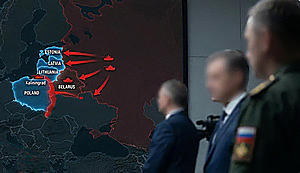
- strengthening the NATO/EU land border with Russia and Belarus – the Eastern Flank Watch project;
- increasing the effectiveness of the European air defense system to counter UAVs (i.e. the NATO air defense system, which unites the air defense systems of European countries) – the European Air Shield project;
- building up the capabilities of the armed forces of European countries to launch long-range missiles;
- creation of a pan-European military mobility area with harmonized rules and a network of routes for the rapid movement of troops and equipment across Europe by 2027;
- use of the future reparations loan from frozen Russian assets for regular financing of Ukraine.
Such projects are currently at the stage of development, approval, and partial implementation. At this, there are certain contradictions regarding the projects. Therefore, they can only be outlined in general terms, with only certain aspects detailed. However, this allows us to determine their essence and general direction.
For example, the strengthening of NATO/EU land borders with Russia and Belarus is being implemented as follows:
- strengthening its protection by national border guard forces;
- creation of engineering barrier systems;
- improving the forward military presence of the Alliance.
In particular, in addition to border services, national armed forces and territorial defense forces are involved in strengthening border protection. Relevant issues are being practiced in military exercises in Poland and Lithuania. For them, this is especially relevant because it is associated with provocative actions of Russian and Belarusian special services that involve migrants from Asia, the Middle East and Africa to break through the Polish and Lithuanian borders. Similar exercises are also organized in other Baltic countries and Finland.
At the same time, Poland has launched the Eastern Shield program and the Baltic Defense Line in the Baltic States, which combine modern surveillance and electronic warfare equipment, various defensive structures (piles, anti-tank ditches, wire fences, reinforced concrete walls) and minefields. Operational data analysis centers will be set up to integrate the information collected by the surveillance systems. These centers will use artificial intelligence to process data and automatically connect to weapon systems.
The programs are supported by significant investments. In particular, Poland has allocated about USD 2.5 billion for the Eastern Shield program.
As mentioned in our article “The North Atlantic Alliance. Distorted Views of the Alliance and the Real Essence of NATO”, the development of NATO’s forward presence is intended to prevent Russian troops from breaking through to Europe and defeat them at the border. This differs from the previous concept, which allowed for the withdrawal of NATO’s forward forces from the border and subsequent re-establishment of their location through counterattacks. After the massive war crimes committed by Russians in the occupied territories of Ukraine, this approach was recognized as unacceptable.
Such plans are being implemented through strengthening the national armed forces of the leading NATO member states – Poland, Lithuania, Latvia, Estonia, Romania, Bulgaria, Finland and Norway, as well as through building up the troops of the Alliance’s Armed Forces on their territory. In addition, the forward presence of the US Armed Forces in these countries is increasing. At the same time, NATO’s ability to respond quickly to crises and to deploy its troops from the rear to the front areas of the European theater of operations is increasing. This issue was also discussed in more detail in the above-mentioned article.
As part of the plans to create a European Air Shield, two interrelated concepts are being developed, namely the Eastern Sentry initiative and the European “Drone Wall” project.
Eastern Sentry envisages redeployment of NATO air defense capabilities in the European theater of operations, focusing them on the most threatened areas. Currently, NATO member states are already supporting this initiative by allocating their fighter jets to be deployed in the forward areas, in particular, in the Baltic States, Poland, Romania, and Bulgaria. This will significantly expand the ability to counter enemy aircraft, but it is ineffective against UAVs.
The European “Drone Wall” is a joint development of the Estonian company DefSecIntel and the Latvian company Origin Robotics. It is a multilayer UAV defense system called Eirshield. It includes radar, video cameras and radio frequency detectors, electronic warfare and firepower, as well as interceptor drones. All this is combined by an automated control system based on artificial intelligence, which determines the coordinates and directions of UAVs and possible threats from them, based on which the method of their destruction is determined.
The European Commission plans to launch the European “Drone Wall” by the end of 2026. The system should be fully operational by the end of 2027. However, plans for its creation are controversial among European countries. In particular, the leaderships of Germany and France consider it too complex and expensive. Concerns have been expressed that it could quickly lose its uniqueness, making all the efforts and money spent on its creation in vain.
A serious problem is also the lack of air defense capabilities in NATO capable of disabling UAVs. German IRIS-Ts are considered the most effective for this purpose. However, there are not enough of them to meet the needs of NATO/EU and Ukraine. And the European industry cannot quickly increase their production.
There is no information on how European countries will build up the capabilities of their armed forces to deliver long-range missile strikes. This is likely to be achieved by increasing the production of already known missile systems (in particular, in Germany and the UK), developing new missiles, and purchasing American Tomahawks. It is quite possible that missile systems will be jointly developed and manufactured by Europe and Ukraine, which already has the relevant experience. After all, according to the “Danish Initiative”, Ukrainian and joint defense enterprises are being opened in European countries.
Under the auspices of the EU, measures are also being taken to create a pan-European military mobility zone or the so-called “military Schengen”. The aim is to increase the efficiency of the movement of NATO member states’ troops and multinational contingents from the rear to the front lines of the European theater of operations.
Today, this is still a rather serious problem. In particular, the redeployment of a division-level unit from France to Poland takes about 30 days, which is considered unacceptable in a rapidly evolving war. The reasons for this state of affairs are: the complexity of bureaucratic procedures for crossing borders by military units, especially with weapons and equipment; insufficient capacity of roads and railways; a large number of bridges and tunnels that could be blown up by the enemy, which would block traffic; and a lack of military transport aircraft to transport heavy equipment.
The European Union has to eliminate these problems. And the consequences of relevant decisions are tested during NATO exercises. One option is to create specially prepared military transport corridors in certain areas.
Providing Ukraine with funds from Russian assets frozen by the EU
This issue is extremely important for Ukraine and therefore requires more detailed consideration.
Currently, the EU uses only interest income from such assets to help Ukraine. They do not exceed five billion euros per year. These funds are mainly used to service the G7 loan to Ukraine.
Of course, this approach is ineffective, as it does not cover the bulk of Russian funds under EU sanctions. With this in mind, the European Commission is proposing an option that would provide Ukraine with a so-called “reparations loan” of EUR 140 billion, secured by the cash equivalent of Russian assets. Russia will lose the right to it if it refuses to pay reparations to Ukraine after the war.
However, the implementation of such a plan is fraught with a number of problems. The main one is the position of Belgium, where the bulk of Russia’s EUR 185 billion in assets are located. The Belgian government is not against the EU using these funds to help Ukraine. However, it is concerned about the possibility of Russia filing a lawsuit against Belgium in international courts. With this in mind, Brussels is demanding that the EU guarantee the protection of Belgian interests. France and Luxembourg, which hold EUR 18 billion and EUR 10 billion of Russian assets respectively, are making the same demands.
The EU also has its own interests, and it wants to maintain its reputation as a reliable partner in banking and finance. That is why it is important for the EU leadership to prove that this is not an arbitrary confiscation of other people’s financial assets, but a well-founded reparations mechanism based on international law and the principle of aggressor responsibility.
At the same time, the EU is taking into account Moscow’s threats to nationalize and quickly sell European assets left in Russia if the EU confiscates its funds. In this regard, Putin signed a decree “On Some Peculiarities of the Sale of Federally Owned Property”. The decree states that such measures are taken in response to “unfriendly actions of the United States and other foreign countries”. Many European companies have left Russia, but their real estate remains there and can be seized by Moscow.
Therefore, the European Commission is proposing a mechanism that would allow the use of Russian assets in the interests of Ukraine by changing the form of their storage, not their ownership. It involves attracting not only interest, but also the cash flows that arise when Russian bonds are redeemed or deposits mature. Currently, these funds are automatically transferred to the accounts of the European Central Bank and remain there as a liability. The EC proposes to exchange them for zero-coupon bonds guaranteed by all EU members, and to allocate the freed-up funds to Ukraine’s needs.
The EU will use these funds to provide Ukraine with a loan with a limited right of repayment. In this case, it means that Ukraine will have to repay the loan only after Russia pays war reparations. At this, Moscow will continue to have the right to make claims against Belgium for the return of its funds. Specific solutions to these issues have not yet been determined, which is viewed by some experts as a failure of the EU’s attempts to deal with this problematic issue. However, this is not the case. The process of harmonization is complex, but it is gradually progressing.
Taking into consideration that the EU includes a large number of countries, each with its own interests, it is not easy to make joint decisions at the level of the Organization and to implement them, and they take a lot of time. This is further complicated by cumbersome bureaucratic procedures within the European Union. They are incomprehensible to non-specialists, as is the content of many EU programs. This leads to the opinion that the EU leadership does not pay enough attention to the defense of Europe and that the European Union is defenseless against Russia. In addition, such views are cultivated by Russian propaganda, which Moscow uses to intimidate Europe and force it to give in, including on the Ukrainian issue.
Unfortunately, such ideas are supported by some Ukrainian experts. They most likely do not realize their essence and thus, as we can see, play into Russia’s hands, undermining Ukraine’s European and Euro-Atlantic aspirations.
Conclusions
Today, Europeans’ realization of the reality of the threats posed by Russia and the shift in their thinking from peaceful to military are being converted by NATO and the EU into actions to strengthen the defense of Europe. The principles of building a new system of Euro-Atlantic and European security have been approved and plans are being developed to implement them.
These principles do not provide for the creation of a separate European army. They relate only to the processes of strengthening the European component of NATO. At this, the EU assumes most of the responsibility for addressing the issues of financial and economic support for European defense.
At this stage, the main issues are determining mechanisms for increasing defense spending by NATO member states, raising funds for the development of the European economy, and using Russian financial assets frozen by the EU for the benefit of Ukraine.
At the same time, the European Union’s leadership is becoming more attentive to purely military aspects of enhancing Europe’s security. First of all, this means strengthening the protection and defense of the eastern borders of NATO/EU, improving the air defense system in terms of countering UAVs, and equipping the armed forces of European countries with long-range missiles.
All this will increase Ukraine’s capabilities in the military confrontation with Russia and strengthen the security of our country. At the same time, its role and importance as one of the key components of the European and Euro-Atlantic security architecture will increase.
Oleh Bereziuk, Heorhii Zahorskyi, Yurii Mykhailenko
Institute for Global Politics
(Image generated by neural network)