Special Services of Hungary: A Friend to Foes, a Foe to Friends
Lately, special attention of the world community and political experts has been focused on Budapest, where US President Donald Trump was to meet with President of the RF Vladimir Putin. However, on October 22, 2025, the Master of the White House said that he had changed his mind about meeting with Russia’s leader in the near future, adding that “we will do it in the future.”
Despite the uncertainty of the situation with the bilateral summit, the Hungarian side has not suspended its preparations. Zoltan Koshkovich, an analyst at the Center for Fundamental Rights, said that Hungary’s special services will be able to provide full security for the two leaders when they arrive in Budapest for the talks. According to him, the national intelligence services are well trained and will do an excellent job. In addition, they will be assisted by their American and Russian colleagues.
Hungary’s Special Services
What are Hungary’s special services? The intelligence community of the country includes:
- The Information Bureau – an agency subordinated to the Prime Minister’s Office and is responsible for conducting foreign intelligence and radio-electronic intelligence;
- The Office for the Protection of the Constitution – an agency subordinated to the Ministry of Internal Affairs and responsible for counterintelligence, counterterrorism, fighting corruption and organized crime, ensuring internal and economic security, and protecting state secrets;
- Special National Security Service – an agency subordinated to the Ministry of Internal Affairs and responsible for technical intelligence, cybersecurity, and operational and technical support of other special services;
- Counterterrorism Center – an agency subordinate to the Ministry of Internal Affairs and responsible for countering national and international terrorism, as well as for providing personal protection to senior state officials.
Transcarpathia in the Crosshairs of Hungary’s Special Services
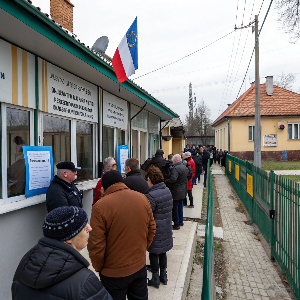 In early May 2025, almost all Ukrainian media discussed the sensational (in their opinion) information that the SBU had, for the first time in the history of Ukraine, exposed an agent network of the Hungarian National Security Service that had been conducting espionage activities in Zakarpattia to the detriment of our country. The task of the network was to collect intelligence on the military security of the region, search for vulnerabilities in ground and air defense, and study the moods of the local population: in particular, scenarios of behavior of the region’s residents if a “peacekeeping contingent” of the Hungarian Armed Forces were to enter the region. As established by counterintelligence, the MNSS planned to expand the range of collecting information, including obtaining data from the frontline and close to frontline regions.
Of course, according to the unwritten laws of intelligence, a country whose agents or intelligence officers are caught red-handed will never officially recognize this fact. This is exactly what Hungarian Minister of Foreign Affairs Peter Szijjarto did when he accused Ukraine of using anti-Hungarian propaganda, which in reality is absolutely groundless.
It should be pointed out that some elements of the operational situation in Zakarpatska region are favorable for the neighboring state’s special services. First and foremost, it is the presence of a large Hungarian community, which before the full-scale war numbered more than 150 thousand people. As of the end of 2024, the number of ethnic Hungarians in the region had dropped to about 70-80 thousand people. Most of those who left for abroad settled in Hungary. However, they still have relatives and friends in Ukraine with whom they keep in touch and from whom they can get “useful” information about the situation in the region.
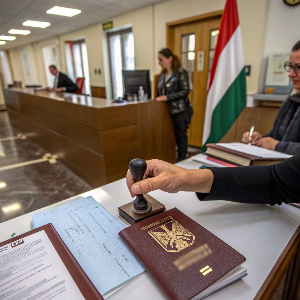 Another factor used by Hungarian special services in their interests is the passportization of residents of Transcarpathia by Budapest [1]. According to the Prosecutor General’s Office of Ukraine, as of August 2019, up to 300,000 Ukrainians had received Hungarian citizenship (i.e., twice as many as there were ethnic Hungarians at that time) [2]. Having a passport of an EU member state made it possible to work in European countries and travel freely (until Ukraine received a visa-free regime in 2017) within the Schengen area. And special services could influence the issue of obtaining such a favorable document, putting the applicant for citizenship in a position of dependence.
Considering the problem of Hungarian special services’ interest in Transcarpathia, it is necessary to remind about the historical context, in particular the emergence of the Hungarian irredenta in Ukraine [3]. After World War I, in June 1920, the Entente Allies and Hungary signed the Treaty of Trianon. This act was in fact revenge on the Hungarians for following the example of the Russian Bolsheviks and creating the Hungarian Soviet Republic [4]. The aforementioned treaty is still perceived in Hungary as the greatest disaster in its history. According to its provisions, the country’s territory was reduced by 77 % (Transcarpathian Ukraine went to Czechoslovakia), and the population – by 59 %. In 1938 and 1940, by the decision of the two so-called Vienna Arbitrations, conducted by Germany and Italy, Hungary received part of the territories of Romania and Czechoslovakia (including Zakarpattia). After the liberation of the region by the Red Army in October 1944, an independent state, Transcarpathian Ukraine, was proclaimed in Zakarpattia, which was annexed to the Ukrainian SSR in July 1945. In accordance with the Paris Peace Accords of 1947, the decisions of the Vienna Arbitrations were canceled, and Hungary returned to the territorial status quo determined for it in 1920. Some consider this to be Stalin’s revenge for the country’s being an ally of Nazi Germany during World War II. Thus, on the one hand, Hungarians found themselves outside the borders of their homeland without changing their place of residence, and on the other hand, they turned from a dominant nation into the largest national minority in Europe. Today, approximately 3 million Hungarians live outside the country.
Former Hungarian Prime Minister (1990-1993) Jozsef Antalla is credited with saying: “The pain of Trianon is knocking in the heart of every Hungarian.” Indeed, there is a widespread feeling of resentment in Hungarian society for the lost territories and for their compatriots who became citizens of neighboring states against their will. For a hundred years, this situation has given rise to an extremely complex set of moral, psychological, ethno-cultural, socio-economic, and, consequently, socio-political problems. Therefore, it is not surprising that the so-called “post-Trianon syndrome” is actively used in the rhetoric of almost all Hungarian parties [5].
Is This for the First Time in the History of Ukraine?
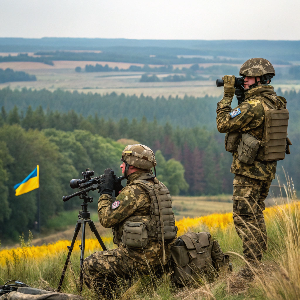 Perhaps, by using the phrase “for the first time in the history of Ukraine”, the SBU was referring to the exposure of the Hungarian military intelligence network, not the Information Bureau, which is the country’s main intelligence agency [6]. Budapest officially recognized the fact that civilian intelligence operates on the territory of our country at the end of June 2015. Speaking in the Parliament, State Secretary of the Prime Minister’s Office János Lazar (responsible for the Information Bureau) stated that the activities of Hungarian intelligence officers in Ukraine have significantly intensified due to the armed conflict in the East of the country bordering Hungary. The official also pointed out that the Information Bureau’s employees were actively working not only in Ukraine but also in the entire region in order to “guarantee political leaders the opportunity to promote national interests”. At the same time, he said that this was the first time in 25 years that Hungary had carried out such activities “in complete opposition to the wishes of the Ukrainian authorities”. János Lazar emphasized that intelligence officers continued their work, despite the fact that the Ukrainian Ministry of Foreign Affairs “is doing its best to counteract it”. According to the Minister, “the future of Hungarians living in Zakarpattia will be a serious issue in the coming decades” and that the Information Bureau “will take measures to protect Hungarians in the Carpathian Basin”.
For its part, Ukraine’s Ministry of Foreign Affairs summoned Hungarian Ambassador Ernő Keskeny, who was told of Kyiv’s concern over such statements by high-ranking officials of the neighboring state and emphasized the inadmissibility of Hungarian special services conducting operations in our country without the consent of Ukrainian partner services.
I would like to believe that the SBU did not learn about the activities of Hungarian intelligence officers from media reports. And if the SBU did not report the detention of Hungarian intelligence officers or agents at the time, it was due to political or operational expediency.
As for the activities of the Hungarian Military National Security Service, subordinated to the Hungarian Ministry of Defense, this special service could not help but show interest in the events that have been unfolding in the East of Ukraine since 2014. But it probably simply did not have the appropriate operational capabilities. And, according to experts, the MNSS has never been an effective intelligence service. And during the existence of the Hungarian People’s Republic, the 2nd Directorate of the General Staff (the predecessor of the MNSS) was generally ridiculed in the West. Thus, the famous British writer John le Carré in his novel The Secret Traveler (1990) sarcastically wrote: “Hungarian military intelligence is the same as Hungarian military music. In fact, they just blow it out of their a.ses”.
Hungary-Ukraine: Spy Wars
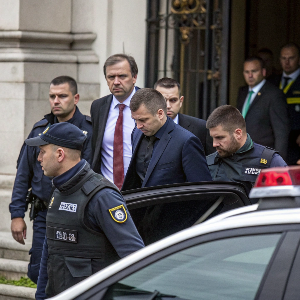 Hungary reacted with lightning speed to the SBU ‘s operation in Zakarpattia, and on the evening of May 9, 2025, in the center of Budapest, officers of the Counterterrorism Center made a tough detention of a former Ukrainian diplomat. He was accused of espionage and deported from the country. The detainee, according to media reports, was the former First Secretary of the Ukrainian Embassy, Serhiy Aleksandrov. After leaving the diplomatic service, he remained in Hungary, where he was engaged in business.
On the same day, Minister of Foreign Affairs of Hungary Peter Szijjarto said that his country had expelled “two spies who worked under diplomatic cover at the Ukrainian Embassy in Budapest”. The Foreign Minister also pointed out that with the outbreak of a full-scale war in Ukraine, anti-Hungarian propaganda there was allegedly getting stronger and stronger, and that the reason for the current “discrediting campaign against Hungarians” was that Budapest did not want to supply weapons to Kyiv and was for peace.
Ukrainian Foreign Ministry Spokesperson Heorhiy Tykhyi issued a short statement on the X network regarding those events: “When the evidence runs out, the witch hunt begins. It is high time for the Hungarian authorities to put an end to the senseless anti-Ukrainian hysteria”.
As is customary in such cases, the Ministry of Foreign Affairs of Ukraine reacted in a mirror image: two diplomats of the Hungarian Embassy were “asked” to return home early.
However, the Hungarian side did not stop there. Already on May 20, 2025, the State Secretary for Public Diplomacy and Public Relations Zoltán Kovács announced that counterintelligence had discovered more “Ukrainian spies”. Their names were given: Roland Tseber, an “illegal employee of Ukrainian intelligence” (?) who had established ties with opposition figures, and István Gollo, who was charged with espionage. The official claimed that the first “spy” allegedly organized meetings with political and military figures to “influence Hungary’s position on the conflict in Ukraine”. For this reason, he was banned from entering the country in 2024. The second “spy” tried to obtain intelligence in the military and energy sectors, which was necessary for Ukraine’s defense needs. According to Zoltán Kovács, the activities of these individuals “correspond to a classic influence operation aimed at discrediting Hungary internationally and putting pressure on the government to change its policy towards Ukraine”.
“Friendly Intelligence” Against allies of NATO and the EU
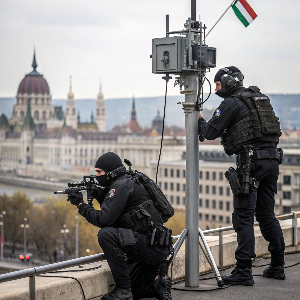 If the current Hungarian government does not consider Ukraine its ally and does not want to see it in either European or Euro-Atlantic structures, what makes Hungary spy on its formal allies?
In November 2023, it became known that despite the public closeness of the positions of the Slovak government led by Robert Fico and Hungarian Prime Minister Viktor Orban, Budapest sent intelligence officers to Bratislava under diplomatic cover. Some of them hold high positions in the Hungarian Embassy and other Hungarian missions in Bratislava. It is clear that Slovakia does not want to expel such “diplomats” in order not to spoil relations with a neighboring and supposedly friendly state. However, Slovakia’s authorities expressed concern about the secret meeting between the Ambassadors of Hungary and Russia (the latter had not communicated with EU diplomats at all before) and the role of the Hungarian community in Slovakia [7] in spreading pro-Russian disinformation.
This behavior of Budapest (not only in relation to neighboring Slovakia) is likely the reason why in May 2024, European countries that are members of the so-called Berne Club [8] restricted intelligence sharing with Hungary and deprived it of its rotating presidency in this organization.
In December 2024, a joint journalistic investigation by Direkt36 and De Tijd found out that in 2015-2017, Hungarian intelligence services conducted operational and technical measures (surveillance, monitoring of telephone conversations, covert searches of hotel rooms, downloading information from laptops) against employees of the European Anti-Fraud Office. This structure once checked a company from Hungary, owned by the son-in-law of the country’s Prime Minister Viktor Orban. Of course, a Spokesperson for the Prime Minister’s Office denied all the allegations, calling them “fake news”. However, it is known that Hungary has previously been accused of hacking the phones of journalists, activists, and opposition figures. In addition, in 2021, the Hungarian government admitted the purchase of Israeli spyware Pegasus.
And in October 2025, Politico reported that during 2012-2018, employees of Hungary’s Permanent Mission in Brussels tried to recruit EU officials for intelligence purposes. Besides, the Hungarian government acquired a very prestigious building in the center of Brussels, directly opposite the office of the Belgian Prime Minister, from which it could theoretically conduct technical intelligence.
The European Commission confirmed that it was conducting an internal investigation into this information in cooperation with the Belgian State Security Service. Some MEPs said that the Commission had been warned at the time, but for some reason no action was taken.
Viktor Orban’s political opponent, Péter Magyar, who worked at the Permanent Representation of Hungary to the EU under the leadership of the current European Commissioner Oliver Varghese, accused him of concealing these facts. At the same time, the aforementioned János Lazar (current Minister of Construction and Transport) said that although he did not remember the exact details, his duty as the curator of the Information Bureau was to protect his country. According to the official, “if Hungarian intelligence officers did go to Brussels, I would have paid them tribute, not reproached them”.
Hungary-Russia: Pragmatic Cooperation or Political Sympathy for a Dictatorial Regime?
Prime Minister of Hungary Viktor Orban’s attitude to Russia’s war against Ukraine is characterized by his insistence on peaceful negotiations, avoidance of confrontation with Russia, skepticism about military assistance to Ukraine, and opposition to Ukraine’s accession to the EU and NATO. He views the armed conflict as “not our war” that is harming Europe’s economy, and states that Hungary is ready to mediate to achieve peace. Viktor Orban has also expressed the opinion that Ukraine “is not an independent state”, which has drawn criticism from other EU leaders.
This position suits Moscow, whose intelligence services feel relatively safe in Budapest. Since the start of Russia’s full-scale aggression against Ukraine, at least 681 Russian diplomats (most of them career intelligence officers) have been declared persona non grata in Europe. The expulsions took place almost everywhere. The only exception was Hungary, the only EU country from which not a single employee of Russian diplomatic and consular missions was expelled. Therefore, officers of the Russian Foreign Intelligence Service and the GRU of the General Staff can continue to work safely in cover positions at the Embassy in Budapest and the Consulate General in Debrecen, as well as at the Russian Cultural Center, the Trade Mission, the Russian Ministry of Defense’s office for organizing and conducting military memorial work in Hungary [9], not to mention the military attaché office. Since the leadership of the Russian Foreign Intelligence Service often talks about preserving the traditions of the KGB of the USSR, we can be sure that among the clergy of the Holy Trinity parish of the Russian Orthodox Church in Budapest there are graduates of the Yuri Andropov Academy of Foreign Intelligence.
I think that the “most-favored-nation” status in Moscow is also enjoyed by the Hungarian Ambassador to Russia since 2018, Norbert Konkoy, a graduate of the Moscow State Institute of International Relations (1992), a famous “forge of personnel” for the KGB/Foreign Intelligence Service officers and an operational base for recruiting agents from among foreign students. In December 2024, it was through him that the FSB transmitted a proposal to Kyiv to exchange prisoners with Ukraine. This happened after Vladimir Putin’s conversation with Viktor Orban, who also wanted to present himself as a peacemaker.
Moscow is not only grateful to Budapest for its actual “strikebreaking” (although it did not reduce the price of Russian gas for Hungary [10]), but also acts as its “advocate” in the political confrontation with Brussels. For example, in August 2025, the Russian Foreign Intelligence Service accused the European Commission of intending to “change the regime in Budapest” and bring to power the leader of the opposition party Tisa, Peter Magyar, Viktor Orban’s main rival. Russian intelligence claims that significant material, administrative, media, and lobbying resources have already been mobilized to support him. Financial resources are ready to be provided by German party funds, a number of Norwegian human rights NGOs and the European People’s Party. Plus, the Russian Foreign Intelligence Service could not help involving Ukraine in the plan they had devised. It was formulated literally as follows: “Kyiv, offended by Budapest’s blocking of the European integration process, has actively joined the campaign to dismantle the Hungarian government on Brussels’ orders. At the same time, the Zelenskyy regime is doing the dirtiest work, including destabilizing the situation in Hungary through the capabilities of the Ukrainian special services and the diaspora living there.” As the saying goes, there is nothing to add. Experts in Yasenevo tried to carry out the so-called KGB influence actions in the best traditions of the USSR, which are called assistance measures in modern intelligence argo.
Volodymyr Palyvoda,
expert in international relations
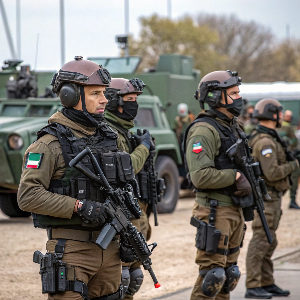
(Image generated by neural network)
Notes:
[1] On January 1, 2011, a law came into force in Hungary that makes it easier for foreign Hungarians to obtain citizenship. The conditions for this were set quite liberally: no criminal record, basic knowledge of the Hungarian language and Hungarian origin. At the same time, it was enough for one of the closest relatives to have been born in Transcarpathia before 1920 or during the war period (1938-1945).
[2] Hungary does not officially publish general statistics on the number of passports issued to foreign Hungarians.
[3] Iredenta is an ethnic minority living compactly in a state bordering its historical homeland, as well as a policy aimed at reuniting this territory with the homeland state. This concept differs from the ethnic diaspora, as irredenta is usually concentrated in border areas, while diaspora is more evenly distributed and often at a considerable distance from the homeland.
[4] A short-lived communist regime in Hungary between March 21 and August 6, 1919. The republic existed with the material support of Soviet Russia, and Vladimir Lenin gave its leader Bela Kun recommendations and direct instructions via the radio telegraph.
[5] For more details on this topic, see: Palyvoda V.O. Hungarians of Transcarpathia: Historical Aspect, Present and Prospects. [Electronic resource]. Strategic Priorities. – 2018. – No. 1 (46). – P. 63-69. – Access mode // https://niss-priority.com/index.php/journal/article/view/21/20
[6] In 1996-2010 and in 2014-2018, the Information Bureau was subordinated to the Prime Minister’’s Office. In 2010-2012 and 2018-2022, it was subordinated to the Ministry of Foreign Affairs. Such subordination (similar to the British MI6) facilitated the process of interagency cooperation, resolved the problem of placing intelligence officers under diplomatic cover, and helped to encrypt them from the outside world. In 2022, the Information Bureau was subordinated to the head of the Prime Minister’s Office.
[7] According to the official 2011 census, almost 460 thousand Hungarians lived in Slovakia, which is 8.5 % of the total population. Hungary has granted Slovak Hungarians the possibility of dual citizenship, both Slovak and Hungarian, by a special law.
[8] The Bern Club is an organization for intelligence sharing between the intelligence services of 28 EU countries, Norway and Switzerland, named after the city of Bern (Switzerland), where its headquarters is located. It has existed since 1971 and is an informal forum for intelligence officers to exchange data, experience and opinions, as well as discuss topical issues of the intelligence community. The Club does not have a secretariat and does not make any decisions that are binding on the EU intelligence services.
[9] There are 829 Soviet military graves from the Second World War in Hungary, located in all 19 regions of the country and Budapest.
[10] In 2022, Hungary paid for gas at one of the highest prices on the continent – by 43 % higher than the EU average. This was partly due to the government signing additional contracts with Gazprom during a period of record high prices. Since 2023, the average price of imported gas in Hungary has been 2 % higher than in other EU countries. At the same time, countries such as Poland, Germany, and Austria, having severed ties with Russian pipelines, have come close to or even fallen below the EU average price thanks to LNG imports.