How He Is Being Removed from Power
Global experts are noting changes in the nature of Moscow’s war against Ukraine. The war seems to be reaching a dead end. At the same time, Russia is facing acute problems that threaten its very existence;
According to analysts, in this situation, the only way for the Kremlin to avoid a crisis is to suspend the war on the basis of certain compromises with Ukraine. However, Putin refuses to do so;
The reasons for this position of the Russian president, who only talks about his readiness for peace, are his personal ambitions, which are exacerbated by negative aspects of his mental state.
Under the circumstances, certain forces are trying to somehow limit Putin’s power and create conditions for its transfer to his successor. So far, this has been sporadic, but it could happen.
According to some experts, Russia’s war against Ukraine is reaching a turning point that could lead to certain changes in its further course. This is confirmed by a number of new aspects in the development of the situation, which are of fundamental importance. In general, they are well known and it is on them that attention is focused in order to determine the basis for the further course of events. Therefore, I will briefly remind you of them.
The main aspect mentioned is the actual transition of the war into a positional form, when neither side can achieve tangible success. Right now, there is a dynamic equilibrium, which is gradually becoming static. This is evident and confirmed by the situation on the front lines. In particular, Russia has lost its advantage in the use of artillery and armored vehicles, and its greater manpower is offset by the provision of Western weapons to Ukraine, which are significantly superior to Russian ones. Besides, Ukraine is in a defensive position, which allows it to contain the Russian offensive with fewer forces. But they are not enough to carry out an offensive. At the same time, Moscow has not achieved any goals in its war, except for creating a land corridor to Crimea. Neither the USA, nor Europe has undertaken to divide the world with Russia; on the contrary, they have united in opposition to its military expansion. The process of NATO enlargement has not only not been suspended, but has received a new impetus in the form of the admission of Finland and Sweden, which has put Russia in an even worse position. Russia’s attempts to establish control over Ukraine have only strengthened Ukraine’s statehood, enhancing its defense capabilities and deepening European integration.
As for the land corridor between Russia and Crimea, it is controlled by the Ukrainian Armed Forces, which prevents the Russians from using it to the full.
At the same time, Moscow is unable to change the situation in its favor, as the combined potential of the USA and Europe, which are Ukraine’s partners, significantly outweighs Russia’s capabilities, even with the help of other totalitarian countries. Russia is clearly losing the so-called resource war, as evidenced by the rapid deterioration of its economy, as demonstrated by the well-known facts characterizing the economic problems of the Russian Federation. The most critical of these are as follows: the beginning of a decline in real GDP; a rapid increase in the state budget deficit; a crisis in the coal, metallurgical, machine-building, construction, and agricultural sectors, as well as its approach in the banking sector. Moreover, Moscow cannot cope with these problems without ending the war, as they are linked to excessive military spending and Western sanctions.
The Kremlin’s hopes that the West will stop supporting Ukraine and give in on us out of fear of a Russian attack, that the USA and Europe will get tired of the Russian-Ukrainian conflict, and that European and transatlantic unity will collapse, are not coming true. All of these factors are indeed present, but they have not reached a critical level and do not play a decisive role.
According to experts, all this resembles the situation that developed in the USSR on the eve and at the beginning of its collapse. And as a tool that would allow Russia to postpone such prospects, the use of “military communism” methods or North Korean approaches is again being considered, which include: complete nationalization of the economy; introduction of fixed prices for essential goods, and then a ration card system for their distribution; open or covert confiscation of the population’s bank savings.
Analysts believe that such measures may slow down but not stop the processes of Russia’s disintegration. Moreover, the sharp aggravation of socio-economic problems in the country will lead to mass protests by the population, including demands to overthrow the current government, as was the case in the 1990s. In addition, the nationalization of the economy and the confiscation of bank deposits will directly affect the country’s ruling elite, who will lose their wealth. And this is in the best-case scenario, since the experience of the USSR has shown the possibility of a complete change of the country’s elites with the physical destruction of their representatives.
According to political scientists, the only more or less convenient way out for Russia in such circumstances is to end the war on terms of certain compromises with Ukraine. Only this will allow it to avoid Western sanctions and radically reduce military spending, which is quite understandable. At the same time, despite the obviousness of these facts, Putin continues the war against Ukraine, while putting forward conditions that are unacceptable to Ukraine even for the suspension of hostilities. Experts consider all his statements about Russia’s readiness for negotiations and its desire to accelerate the peace process to be merely attempts to avoid the US decision to impose new sanctions on Russia, which would be critical for it. The reasons for Putin’s position are completely understandable. Most experts link them to his personal ambitions, namely, his desire to go down in history as a “great man” who revived the Russian Empire in modern times. Besides, the war has direct practical importance for him as a means of staying in power.
Incidentally, all these goals have become sacred to Putin, and he cannot abandon them because doing so would mean the collapse of his entire life’s work. This is entirely consistent with the positions of the leaders of Soviet Russia and the USSR in the early stages of its existence, namely Lenin and Stalin, who had similar goals. At that time, such efforts concerned Poland and Finland, which were part of imperial Russia before the 1917 revolution. Today, the goal is to seize Ukraine.
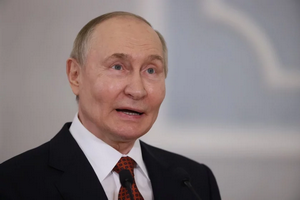 At the same time, a separate factor influencing Putin’s actions regarding Ukraine is the peculiarities of his psyche, which are common to many elderly people. This is clearly demonstrated by both his appearance and his behavior in public. It is not my place to make the diagnosis, as there are real specialists in this field. But to understand what is happening to him, it is enough to look at a photo of him taken by a non-court photographer in Minsk after the meeting of the Supreme Eurasian Economic Council on June 27 this year. It is a crazy look that emphasizes what he is really like. Most likely, Putin’s mental state, combined with the practice common in totalitarian countries of reporting to him only what he wants to hear, has caused his perceiving reality inadequately. There are many examples of this, but I will cite only those that show the basis on which the Russian president builds his policy and makes decisions, including those regarding the war against Ukraine.
First of all, we can note his confidence in the stability of the Russian economy, which allegedly retains its capacity for positive development despite Western sanctions. He has the same confidence in the power of the Russian Armed Forces and their capability of defeating Ukraine, as well as influencing the Ukrainian Government and population by carrying out terrorist attacks on peaceful cities and towns. Putin’s views can still be explained in some way, as can his thoughts on the weakness of NATO and the EU. But his hopes that US President Donald Trump will divide the world with him, leave NATO, or force Ukraine to surrender are quite surprising. Such views may be held by an ordinary Russian citizen brainwashed by the Kremlin propaganda, but not by its leader, who determines the country’s course and does so virtually single-handedly. That is why he is leading it to the brink of disaster, which the Russian ruling elite is beginning to realize, at least the part of it that is still capable of doing so.
No one has abolished the instinct for self-preservation yet. Besides, many Russian officials want to return to the Western benefits from which they were cut off as a result of Putin’s policy. This applies primarily to the relatively young generation of Russian politicians and officials who did not experience the USSR in their mature years and have no nostalgia for it. Therefore, top Russian officials, or more precisely, the oligarchs behind them, are beginning to take measures to counter Putin’s destructive actions.
So far, this has only been done openly in the form of public demonstrations of the country’s economic problems, which are likely intended to influence him. In particular, one such step was taken at the St. Petersburg International Economic Forum in June this year. As is well known, during their speeches, Russian Minister of Economic Development Reshetnikov, Minister of Finance Siluanov, Governor of the Central Bank of Russia Nabiullina, Head of Sberbank Gref, Chairman of the State Duma Committee on Budget and Taxes Markov, and other government officials, politicians, and businessmen described the economic situation in the country as the beginning of a deep crisis.
These facts have already been mentioned in our previous articles, but in the context of the topic at hand, they take on special significance. The speeches of those individuals cannot yet be called a rebellion against Putin, but they are a telling sign. De facto, this was the first manifestation of open disagreement between Russian government officials and Putin, who claimed during the same forum that the Russian economy was successful. At the same time, there are also cases of the government’s failure to fulfill Putin’s orders. In particular, in June this year, Putin set a strategic task for the country’s government to reduce the share of imports in GDP to below 17 % by 2030. For his part, Russian Minister of Economic Development Reshetnikov set completely different goals, which involve balancing trade by increasing imports of goods from Russia’s partner countries. In his view, this will make it possible to stop the outflow of capital from the Russian Federation and weaken the ruble, as its high level is damaging to the Russian economy.
The same applies to plans to introduce a digital ruble in Russia. Putin has instructed the Central Bank to speed up this process in order to ensure its widespread use by citizens and businesses in the near future. According to the Russian president, the digital ruble would strengthen Russia’s independence from foreign payment systems and help lay the foundation for a digital economy.
At the same time, the Central Bank’s management has postponed the implementation of Putin’s order. According to Nabiullina’s explanation, there are currently no appropriate opportunities for this. It is necessary to work out all the details, consult with banks, and resolve other issues. What else could this be but the usual “excuses” of officials who do not want to do something? In other words, the government is gradually beginning to act independently from Putin, which until recently was completely impossible.
Against this background, some experts’ assumptions about the possible start of a controlled transfer of power in Russia from Putin to his successor, chosen by him personally or by the country’s political and oligarchic circles, are attracting attention. Among the likely candidates for this role is Putin’s daughter, M. Vorontsova. She has recently been actively entering the Russian political arena. In principle, Vorontsova suits everyone. On the one hand, she may be positively perceived by the Russian population, which mostly supports Putin, and on the other hand, she does not have significant political weight or independent capital, which allows the Russian ruling elite to manipulate her. However, according to some political analysts, she is already being used by representatives of the Russian ruling elite who advocate ending the war to influence Putin.
In general, all of the above may indicate the possible beginning of changes in the Russian power system. This is manifested in the actions of certain forces in the leadership and among the country’s oligarchs, who exclude Putin from the real information space, sabotage his decisions in the economic sphere, and pursue their own course. So far, such practices are sporadic in nature or concealed by certain forces. However, as Russia’s external and internal problems worsen, they will become more widespread, ultimately leading to removing Putin from power in one form or another.
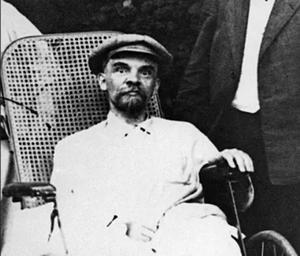 Admittedly, such approaches are commonplace in Russia. In many cases, when the country’s leader ceased to serve the interests of its ruling elite, he was removed from power in this way. The same thing happened when strong competitors to the country’s leaders appeared. In particular, this is exactly what Stalin and his clan did to Lenin, who, like Putin today, had mental disorders. This is documented in photos of Lenin during the last period of his life. Under the pretext of illness, he was isolated and a fake newspaper, Pravda, was printed for him in a single copy, and then his orders were no longer fulfilled at all.
Something similar happened to the General Secretary of the Communist Party of the Soviet Union, the de facto ruler of the Soviet Union, Leonid Brezhnev, who died in office in 1982 at the age of 76, in a state of complete mental disorder. He was ruled by the shadow masters of the USSR, as his environment was the same. For similar reasons, the first president of Russia, Boris Yeltsin, was forced to give up power and essentially handed over the leadership of the country to Vladimir Putin. Incidentally, Boris Yeltsin himself became the head of the Russian Federation as a result of a coup d’état in the USSR, during which the first and last president of the Soviet Union, Mikhail Gorbachev, was overthrown. Thus, Putin’s power is a priori illegitimate.
The topic touched upon is much more complex and requires a more detailed analysis of the relationships in Putin’s circle, which is generally as elderly as he is, with a similar worldview and mental health problems. But this is already a topic for further research. One can draw conclusions about the general situation in the Russian government by referring to the above-mentioned fragments of events.
Thus, the prospect of the end of the Putin era, at least in its current form, is really concretized. Most likely, the future power in the country will not be democratic in the normal sense of the term, will not become a true partner of Ukraine, and will not give up its strategic goals of establishing control over it. But it will be implementing such intentions not militarily, but politically and economically. Nevertheless, the threat of a new Russian attack on Ukraine will continue to persist.
Yurii Ilchenko,
Institute of Global Politics