The BRICS Summit as a Reflection of Global Competition Between China and the USA
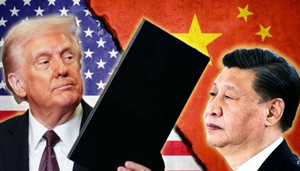
The main trend in the evolving global situation is the ongoing formation of a new system of international relations centered on two leading power centers: the USA and China;
Currently, a struggle for global leadership is underway between them, which involves the creation of their own spheres of geopolitical influence through the establishment of various types of international organizations;
In this regard, Europe stands with the USA, despite their differences, while Russia and the countries of the so-called Global South – which were previously part of the Third World – side with China;
Most of the key developments in the world – including Russia’s war against Ukraine and the USA’s military operation against Iran – reflect this dynamics. Therefore, they are worth special attention.
As mentioned above, the United States and China are building their spheres of geopolitical influence through various international organizations. Through these organizations, they promote their interests both globally and in specific key regions.
In the USA, such international organizations include the G7 and NATO. Despite the emergence of tensions between the USA and European countries due to Donald Trump’s actions, the USA retains the ability to use these organizations to achieve its political and economic goals and project power.
For China, similar instruments include the SCO in Asia and BRICS on the global stage. These were originally created at Russia’s initiative, but China has since taken the lead. The situation within and around the SCO was analyzed in our publication “The SCO and Russia: From a Tool of Influence in Asia to China’s ‘Fiefdom’”. Now let’s focus on BRICS, using the example of the organization’s summit on September 12–13, 2026, in India.
To begin with, let’s recall what BRICS is and what its goals are, which will allow for a better understanding of the current situation within and around the organization. The organization was established in 2009 at Russia’s initiative as BRIC, comprising Brazil, Russia, India, and China. In 2010, South Africa joined, resulting in the organization’s name being changed to BRICS. Since then, Egypt, Ethiopia, Iran, the United Arab Emirates, and Indonesia have also become members.
The stated goal of BRICS is to create favorable conditions for deepening cooperation among its members in the areas of trade, the economy, and investment. These opportunities are based on the strong potential of the organization’s member countries, which collectively account for approximately 50% of the world’s population, 40% of global GDP, and 26% of global trade.
As part of the practical implementation of these objectives, the BRICS Development Bank was established, the BRICS Pay international payment system – modeled after SWIFT – was launched, and the BRICS Contingent Reserve Arrangement was signed, which provides for the provision of mutual financial assistance.
At the same time, China and Russia also use BRICS as a tool to advance their geopolitical interests. The main ones include creating a counterweight and alternative to the G7 as the hub of the Western world and the center of its global influence, by uniting around BRICS countries that have conflicts with the USA and Europe or are unwilling to follow their policies.
Currently, China plays a leading role in BRICS, having pushed Russia into the background. Through the organization’s summits – which serve as important international forums – China promotes the idea of building a multipolar world, which is part of its political struggle against the USA’s hegemony. At the same time, BRICS provides China with additional opportunities to implement its “Belt and Road” strategic initiative, which calls for the creation of a free trade zone and a unified transportation network among participating countries.
India is the second-largest economy within the BRICS group and is primarily interested in it as an international framework that provides additional opportunities to advance its economic interests. At this, India does not want BRICS to become an anti-Western political bloc, although it does see it as a means of strengthening the role of the Global South in the world. Furthermore, India’s participation in BRICS allows it to strengthen its international position and maintain a balance between the United States, Europe, China, and Russia.
Russia’s goals regarding BRICS are similar to those of China; however, unlike China, Russia is unable to lead large-scale economic projects involving countries with strong economies. This is all the more true given that, as a result of Russia’s ongoing war against Ukraine and Western sanctions, it is sinking deeper into an economic crisis and becoming “toxic” to its partners. Therefore, at present, Moscow is limiting its activities within BRICS largely to justifying its aggression against Ukraine and attempting to create more favorable terms of cooperation with China and India – its largest partners.
The other BRICS members have primarily economic interests in their relations with Russia. First and foremost, this concerns the expansion of trade and economic ties with China, which is carried out through the organization’s mechanisms.
These aspects were reflected at the BRICS summit held on September 12–13, 2026, in India. During the meeting of the leaders of the organization’s member countries, a wide range of issues was discussed concerning the deepening of cooperation among BRICS participants with the aim of ensuring their sustainable development, strengthening the organization’s role and position in the global economy and politics, as well as global governance and the building of a multipolar world.
Following the discussion of these issues, a final declaration was adopted, which, in fact, serves as an action plan for China and the countries aligned with it to counter the USA’s global dominance and strengthen their positions in geopolitical competition with the West. The main areas of action to achieve these goals are as follows:
In the political sphere – strengthening BRICS’ influence on political and economic processes worldwide. To this end, BRICS, as an organization, and its members intend to raise the issue of the need to reform the United Nations, the World Bank, the International Monetary Fund, and other global institutions.
BRICS representatives argue that the governing structures and operating methods of those organizations are outdated, which reduces their effectiveness in today’s world. Furthermore, they emphasize the dominance of Western nations within those institutions, which undermines the interests of other countries.
As one of the steps toward resolving these issues, it is proposed to expand the permanent membership of the UN Security Council to include India and other countries from the Global South;
in the financial and economic sphere – reducing the BRICS member states’ dependence on the US dollar. To this end, it is proposed to expand opportunities for trade within BRICS using national currencies, as well as to create alternative payment mechanisms. This issue is particularly important for Russia due to Western sanctions.
At the same time, implementing these plans is a rather complex task due to differences between the financial systems of BRICS member states, as well as divergences in their economic interests. Furthermore, the USA is threatening to impose additional duties (tariffs) on their goods if they abandon the dollar;
In the scientific and technical sphere – creation of an open BRICS community on artificial intelligence with the leading participation of China, establishment of a platform for the joint training of BRICS engineers, and launching a youth exchange program in the field of scientific and technological innovation;
in the security sphere – strengthening efforts to counter the USA’s power politics toward countries of the Global South. In this regard, the USA’s military operation against Iran, a BRICS member, was highlighted. At the same time, summit participants effectively ignored Russia’s war against Ukraine, as China and Iran support it either directly or indirectly.
BRICS’s ability to implement these plans is enhanced by the normalization of relations between China and India, which form the backbone of the organization. This trend was confirmed by the meeting between President of the PRC Xi Jinping and Prime Minister of India N. Modi. The leaders of the two countries acknowledged the broad opportunities for developing cooperation between them, mutual support, and shared successes, despite their different development paths and national circumstances.
As evidence of this was cited the resumption of positive trade momentum between the two countries after it had declined due to the deterioration of Sino-Indian relations following the border conflict in 2020. In 2025–2026, trade between the two countries rose to $151 billion, compared to $128 billion in 2024–2025.
Building on the successes achieved in the trade and economic sphere, the next step was taken toward closer ties between China and India. In particular, an agreement was reached to resume direct air service between the two countries.
At the same time, the BRICS summit in India revealed persistent problems within the organization that prevent it from becoming a fully-fledged international structure and an effective center of power. This is due to disagreements among BRICS member countries and their differing views on the organization’s goals.
For example, despite the warming of relations between China and India, they still remain competitors for influence in the region. Border disputes between them also persist. Meanwhile, Iran and the United Arab Emirates are effectively at war. Tensions also remain high in relations between Egypt and Ethiopia, as well as between India and Pakistan.
Besides, as mentioned above, only China and Russia are actively promoting the idea of positioning the SCO as a counterweight to the West. All others, including India, view it merely as a platform for cooperation in the trade and economic sphere. Moreover, among the BRICS members, the only truly powerful and influential states are China and, to a certain extent, India and Indonesia. The others are, in fact, second-tier countries. As for Russia, it has, in general, become toxic for the majority of the world.
Economic problems in most of the organization’s member countries also pose an obstacle to BRICS’ development. In 2025–2026, China, as the leader of BRICS, began to lose momentum in its economic growth. India retains its status as one of the world’s most dynamic major economies, but faces significant domestic challenges related to the low standard of living for the majority of its population and high unemployment. Russia, another leading BRICS member, is in the midst of a deep crisis.
However, what has become most important for Ukraine is the failure of Russia’s attempts to secure BRICS support for its war against our country – both politically and in terms of addressing the problems of the Russian economy.
The only positive outcome for Putin and Russia was that Russia’s war against Ukraine was not mentioned at all during the BRICS summit or in its final documents. In other words, he avoided open condemnation.
However, during his meeting with Putin, Prime Minister of India N. Modi once again called on him to cease hostilities. N. Modi agreed to India’s continued import of Russian oil, but only if payments are made in Indian rupees, as was previously the case. As a condition for switching to rubles, he demanded that Russia transfer its military technologies to India – a demand Russia finds unacceptable.
However, the US Congress’ final passage of Lindsey Graham’s bill on sanctions against Russia, which is expected in the near future, will definitively remove the issue of India’s trade with Russia from the agenda. This will also significantly affect China. It is evident that this is precisely why Chinese President Xi Jinping declined a separate meeting with Putin on the sidelines of the BRICS summit.
Thus, China continues to pursue a consistent policy of countering the USA’s global dominance and strengthening its international position by building its own sphere of influence within various international organizations.
The most important of these for China is BRICS, which operates on a global scale and includes countries of the former Third World – now referred to as the Global South – as well as Russia.
BRICS was established as an economic organization, but China uses it as a counterweight to the West. Indeed, during the BRICS summit in September of this year, a declaration was adopted that effectively serves as a plan to strengthen the organization’s position in global competition with the Western world.
Specifically, the plan calls for enhancing BRICS’ role in global political and economic processes, reducing member countries’ dependence on the United States and the US dollar, positioning China as a leader in the field of artificial intelligence, and strengthening resistance to the USA’s power politics toward the countries of the Global South.
Improved relations between China and India – the most powerful members of BRICS and its backbone – create favorable opportunities for implementing such plans. At the same time, the organization continues to face significant internal problems that prevent it from becoming a fully-fledged international structure.
Against this background, Russia, as the initiator of the BRICS group, has lost its standing within it. It is still attempting to pursue anti-Western policies through the group, but only to the extent that these align with China’s interests. BRICS does not support Russia’s war against Ukraine and does not assist it in resolving its economic problems. Moreover, Russia is also becoming toxic for the organization’s own members.
Yurii Ilchenko,
Institute for Global Politics