Slovak Information Service:
in the Midst of Crises and Political Scandals
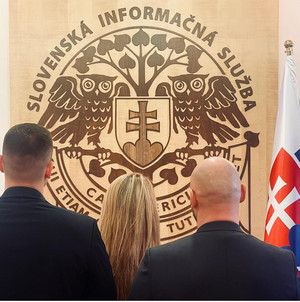
The Slovak Information Service (SIS [1]) was established in 1993 after the breakup of the Czech and Slovak Federal Republic. It could have broken with the communist past and become an instrument for ensuring the security of the young state [2]. However, in reality, almost from the very beginning of its existence, the SIS became an instrument of political influence. It was burdened by the legacy of the State Security Service (StB) – the political police of the Czechoslovak Socialist Republic, whose personnel and methods partially infiltrated the structures of the SIS [3].
In the following decades, the SIS repeatedly found itself at the center of scandals – from its own brutal operations in the 1990s, through corruption scandals, to today’s disputes over its politicization and strategic directions.
Unlike the Czech Republic, which passed a lustration law in 1991 prohibiting the employment of former StB employees in state bodies, Slovakia did not introduce similar rules. The process of reforming and recruiting personnel in the security sector has been inconsistent and vulnerable to political influence.
This led Western partners to exercise increased caution in sharing information with Bratislava in the 1990s due to concerns about intelligence leaks and the stability of the security services.
The lack of structural reforms at the early stages of its existence meant that the SIS never fully developed an institutional culture based on transparency for supervisory bodies and apoliticality. Instead, the SIS perpetuated loyalty to the authorities rather than to the state, which contributed to its politicization in the following decades.
The Dark Nineties
In August 1995, Michal Kováč Jr., son of the then President of Slovakia, was kidnapped. An investigation conducted by Austrian authorities revealed that the operation was carried out by SIS employees acting on the orders of Prime Minister Vladimír Mečiar’s government [4]. The victim was beaten, drugged, and taken to Austria, where he was left in front of a police station in Hainburg. The aim of the action was to discredit the head of state, a political opponent of the head of government.
In April 1996, former police officer Robert Remiaš, who was a witness in the kidnapping case, was killed in a car explosion in Bratislava. Journalists found out that he had been under SIS surveillance for several months before his death, and his phone had been tapped. It seems like Robert Remiaš’s murder was meant to be a warning to anyone who wanted to reveal the secrets of the special services.
In 1998, Vladimír Mečiar issued a regulatory act that provided amnesty for those guilty in this case, including the then-controversial head of the SIS, Ivan Leksa [5]. As The Slovak Spectator wrote, this decision became a symbol of impunity and seriously damaged the image of the rule of law.
Operation “Gorilla”
After a decade of relative calm, the SIS found itself at the center of another scandal. In 2005-2006, during the government of Prime Minister Mikuláš Dzurinda, the SIS launched an operation codenamed “Gorilla”. Its aim was to track contacts between politicians from the ruling coalition and representatives of the financial investment group Penta Investments, who were suspected of bribery during the privatization of energy companies.
The SIS recorded conversations in which bribes, kickbacks, and informal agreements between politicians and businessmen were discussed. The materials revealed the structural nature of corruption in public life. After the leak of secret documents and their publication in December 2011, BBC News stated that the case exposed a system in which public interests were subordinated to private financial agreements.
In 2020, the police arrested Jaroslav Haščák, co-owner of Penta Investments, but two years later, the court dropped the charges against him due to lack of evidence. According to Transparency International Slovakia, the lack of accountability has reinforced the belief in the impunity of the political elite. Western experts emphasized that the “Gorilla” case exposed the dual nature of the SIS – operating between politics and counterintelligence in the absence of proper oversight. It was also pointed out that weak parliamentary control over the special services contributes to corruption and abuse.
From a Political-Business Alliance to the Murder of Ján Kuciak
For more than two decades, millionaire Marián Kočner was a symbol of impunity for Slovakia’s political and business elite. The media described him as a man on the borderline between politics, the secret services, and the financial world, capable of using his connections in the state apparatus and the justice system to promote his own interests.
In the 1990s, he was linked to officials from Vladimir Meciar’s government and SIS officers. He was considered a man who knew everyone, from politicians to prosecutors. Marián Kočner’s name appeared in numerous business scandals, including the “Gorilla” case. According to journalists, he maintained contacts with SIS officers and used them to resolve his financial conflicts.
Former SIS counterintelligence chief Peter Tot testified to the police that, at Marián Kočner’s request, he organized surveillance of journalists, including Ján Kuciak, Monika Todova, and other reporters. This illegal operation began in the first quarter of 2017 and was aimed at monitoring media activities that harmed the interests of the millionaire. Peter Tot enlisted the help of former SIS deputy head of external surveillance Miroslav Krjak. Later, retired secret service employees justified themselves by saying that they were not spying on journalists (in the classic sense), but were only acting as paparazzi. The issue of former SIS officers’ private side jobs, which was often reported in the media, deepened the crisis of confidence in the secret service and the state.
In February 2018, investigative journalist Ján Kuciak and his fiancée Martina Kušnírová were murdered. He had been working on a series of reports exposing Marian Marián Kočner’s links to politicians and businessmen, as well as his financial abuses.
According to the indictment by the Special Prosecutor’s Office, the millionaire allegedly ordered the murder as revenge for the compromising publications. The trial began in 2020. The court of first instance acquitted Marián Kočner, but a year later, the Slovak Supreme Court overturned the verdict and ordered a retrial. The legal proceedings continue to this day, and the millionaire is serving a 19-year prison sentence for forging promissory notes in the TV Markíza case [8].
According to Transparency International Slovakia, the murder of Ján Kuciak and the trial of Marián Kočner were a turning point when Slovak society rejected the culture of impunity and forced the authorities and law enforcement agencies to pay for their actions. A wave of protests in the spring of 2018 led to the resignation of Interior Minister Tomáš Drucker, Police Chief Tibor Gašpar, and Prime Minister Robert Fico. The Slovak media wrote at the time that Marián Kočner was not just a criminal, but a symbol of a system in which the government, businesses, and law enforcement agencies were above the law.
In early November 2025, it became known that the millionaire suspected of ordering the murder of Ján Kuciak and his fiancée would be retried in January 2026, for which a new court panel would be formed.
SIS Again at the Center of a Political Storm
In 2024, SIS again found itself at the center of a political controversy over state standards, the independence of special services, and the limits of their loyalty to the government. The appointment of Pavol Gašpar, son of the aforementioned former police chief and current deputy head of the National Council (Parliament) of Slovakia, Tibor Gašpar [9], as chief of the SIS became a symbol of this tension. This decision by Prime Minister Robert Fico was not simply a personnel change, but rather part of a broader political strategy that increases the politicization of security services.
After the 2023 elections, Pavol Gašpar was appointed State Secretary of the Ministry of Justice. In this position, he was actively involved in preparing and lobbying for amendments to the Criminal Code, which, according to critics, significantly weakened the struggle against corruption and economic crimes. The changes included, among other things, the abolition or restriction of the powers of the Special Prosecutor’s Office [10] and weakening of penalties for certain financial crimes.
The draft law, pushed through under an expedited procedure, was one of the most controversial pieces of legislation since 2020 and led to a loss of confidence in the government in the eyes of EU institutions and Western partners. Pavol Gašpar’s role in this process – as one of the officials overseeing the reform – strengthened the impression that his subsequent appointment as chief of the SIS was political in nature and the result of his loyalty to the ruling coalition.
The media reported on Pavol Gašpar’s previous contacts with politicians from Robert Fico’s “Direction – Social Democracy” party and “Nitra oligarchic circles”, as well as his participation in meetings at the so-called “Hunting Lodge”, where strategies for influencing the justice system were discussed. Prior to his appointment [12], the government changed the rules regarding the qualifications required of the chief of the SIS – a move that critics considered tailored to a specific candidate. Tibor Gašpar defended his son, arguing that half of the previous heads of the secret service did not have his experience [13].
The opposition considered Pavol Gašpar’s appointment risky and detrimental to cooperation with NATO and the EU. However, government supporters argued that the new SIS director met the formal requirements and enjoyed the Prime Minister’s trust. According to experts, the SIS’ personnel policy should be seen as part of a process of “capturing” the secret services [14] and a gradual shift towards Moscow.
These disputes intensified after Pavol Gašpar was involved in a traffic accident in Nitra in August 2025, in which a minor was injured. According to media reports, the chief of the SIS allegedly even fled the scene. It turned out that he owned a Dodge Challenger SRT Hellcat sports car, which he had not declared in his property declaration. The Slovak opposition called on Pavol Gašpar to resign, to which he replied that he would do so “only if required by law”. His father, Tibor Gašpar, said that if his guilt was proven, his son would “face the consequences”. According to experts, the current situation in the SIS is the result of a long-standing lack of transparency and weak parliamentary control, and the case of Pavol Gašpar proves that the problem is systemic.
The West’s Reaction and Domestic Consequences
According to statements by the European Commission, disputes over the rule of law, rapid changes in criminal law, tensions surrounding the independence of law enforcement agencies, and accusations against SIS leadership undermine trust in the institutions responsible for security and international cooperation. The US Department of State shares this view.
Weak oversight and lack of transparency continue to force Western partners to exercise caution in sharing intelligence and to limit cooperation with the SIS.
Internally, the special service remains an organization with a dual identity – between its mission to protect state security and the temptation to participate in political games. The opposition demands transparency and effective parliamentary control, while the government defends the secrecy and autonomy of the SIS.
This imbalance creates a space in which the executive branch can exploit the security service for party political purposes, while citizens lose trust in the very concept of state security.
As Transparency International Slovakia concludes: “Unless genuine democratic control over the SIS is established, Slovakia will continue to function in the shadow of its own secret structures, whose loyalty to the state and its citizens remains an open question”.
Volodymyr Palyvoda,
expert in international relations
Notes:
[1] Acronym from the Slovak name — Slovenská informačná služba.
[2] Between 1939 and 1945, the Slovak State existed as an ally and satellite of Nazi Germany. The modern Slovak Republic is not considered its successor.
[3] The SIS reports to the Prime Minister. The special service has broad powers, practically similar to those that the StB of the Czechoslovak Socialist Republic had at one time: foreign intelligence, counterintelligence, fighting terrorism, corruption, and organized crime, ensuring internal security, and protecting state secrets.
[4] Vladimír Mečiar – the leader of the People’s Party – Movement for a Democratic Slovakia. He was one of the initiators of the country’s withdrawal from the CSFR. He served as Prime Minister of Slovakia in 1990-1991 and 1992-1998. He was criticized by his opponents and Western political organizations for his autocratic style of governance and ties to organized crime. The years of his rule became infamous as Mečiarism.
[10] In March 2021, the National Criminal Agency of the Slovak Ministry of the Interior, with the permission of the Special Prosecutor’s Office, detained the then head of the SIS, Vladimir Pčolinský, on suspicion of committing a number of corruption crimes.
[5] Ivan Lexa headed the SIS from 1995 to 1998. After Vladimír Mečiar resigned as Prime Minister, he was elected to Parliament and therefore expected to enjoy immunity from prosecution. However, the new SIS leadership conducted an internal investigation, which revealed that Ivan Lexa and his team had been working closely with Russian special services, helping them conduct intelligence activities against neighboring countries that were preparing to join NATO at the time. At the same time, he provided “protection” to Russian-Ukrainian mafia groups that controlled the criminal world of Slovakia during the reign of Vladimir Mečiar. At the same time, the former chief of the SIS received a significant portion of state property, which the government of his political patron distributed exclusively among his people during the “wild” privatization. It is believed that Ivan Lexa’s clan received real estate worth hundreds of millions of dollars. In April 1999, Parliament stripped him of his immunity. Ivan Lexa was arrested and spent three months in prison. After his release on bail, he fled the country, and in July 2000, he was placed on Interpol’s international wanted list. Two years later, Ivan Lexa was detained in South Africa with a fake passport and extradited to Slovakia. In a series of trials, he was found not guilty, or the criminal proceedings were discontinued. In two cases, Ivan Lexa fell under the current amnesty. Members of Parliament were only able to revoke it in April 2017, which made it possible to resume the trial of the kidnapping of Michal Kováč Jr. But it was not until August 2025 that the so-called judicial senate was assembled. The case, which consists of more than 40 volumes, is currently being examined, so it is not known when the judges will be able to pass sentence on Ivan Lexa and his accomplices.
[6] Mikuláš Dzurinda – Prime Minister of Slovakia from 1998 to 2006. During his tenure, the country joined the EU and NATO. From 2015, he was an advisor to Ukrainian President Petro Poroshenko. The politician’s father, Mikuláš Dzurinda, was an ethnic Rusyn (the ethnonym for Ukrainians until the 18th -20th centuries).
[7] In 2012, the Constitutional Court of the Slovak Republic ruled that the wiretapping was illegal. According to the Constitutional Court judges, the request for wiretapping was not sufficiently justified.
[8] In 2016, Marián Kočner wanted to collect EUR 69 million from this television company, claiming that he had the relevant promissory notes. It later turned out that the documents were forged and that former Minister of Economy Pavol Rusko was involved in the scam and helped to obtain the money.
[9] In January 2024, Prime Minister Robert Fico nominated Tibor Gašpar for the position of SIS director, but then-President Zuzana Čaputová stated that she would never approve the appointment of a person who was a suspect in a number of criminal cases.
[11] Nitra is a city in western Slovakia, the administrative center of the region of the same name. Tibor Gašpar is the son-in-law of Miroslav Bödör, owner of the Nitra security company Bonul and a local oligarch. The murdered journalist Ján Kuciak wrote about his involvement in various illegal schemes and classic corruption. Norbert Bödör (Miroslav’s son) is also an influential local businessman.
[12] In February 2024, when Prime Minister Robert Fico proposed appointing Gašpar Jr. as head of the SIS instead of Gašpar Sr., then-President Zuzana Čaputová also refused to give her consent. Pavol Gašpar was appointed by the government to the position of deputy head of the special service, which did not require the approval of the head of state. In August 2024, the newly elected President of Slovakia, Peter Pellegrini (Robert Fico’s political ally), appointed Pavol Gašpar as head of the SIS.
[13] Pavol Gašpar was once a suspect in a case involving the bribery of a former police investigator in the amount of EUR 60,000. However, the case was closed due to the expiration of the statute of limitations for criminal prosecution. In September 2025, the “SME” newspaper published an analysis showing that Pavol Gašpar’s university thesis was plagiarized. Two-thirds of its content was taken from foreign publications. Of the four sources he cited, two were not even mentioned in the thesis.
[14] Given that Military Intelligence is subordinate to the Slovak Ministry of Defense, it is already under the control of Robert Fico’s government. After his return to power, Major General Juraj Štefanka was appointed the new head of the secret service in November 2023.