Hard Times for French Intelligence
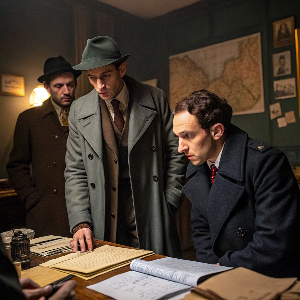
According to foreign experts, the Directorate General for External Security (hereinafter — DGSE — from the French Direction générale de la Sécurité extérieure –Transl.) [1], one of the key elements of the France’s intelligence community, has been experiencing a serious crisis in recent years and has hardly demonstrated effective activity. Back in October 2023, commenting on this situation, the satirical weekly Le Canard enchaîné published an article “DGSE: 6 Years of Blunders and Mistakes”, which claimed that the reputation of the intelligence service had “fallen below the baseboard” and that its chief, Bernard Émié, was facing dismissal. The spies of the Fifth Republic [2] turned out to be unprepared for the events around Ukraine, missed a series of anti-French coups in Africa and Azerbaijan’s military operation in Nagorno-Karabakh in September 2023 — not to mention the internal scandals that regularly shook the elite agency.
African Failure
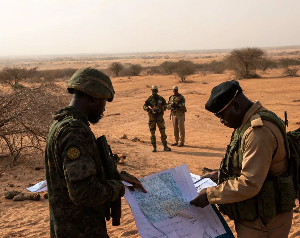 The media’s assessment differed little from that of the country’s political leadership, which accused the DGSE of failing to adequately identify the threats that led to coups d’état in Mali (May 2021), Burkina Faso (January 2022), and Niger (July 2023). Those events painfully affected France’s international authority and its position on the African continent. The military juntas of the above-mentioned countries “asked” for the withdrawal of French troops, which had been stationed there for many years.
However, the troubles for France did not end there. In November 2023, the new government of Burkina Faso accused and arrested four employees of the DGSE technical unit who had been sent to the Republic to set up communication systems. According to Le Monde, shortly before their arrest, about twenty officers of the Russian GRU arrived in Ouagadougou, which made Paris suspect Moscow’s interference. To avoid further problems, an order was given to urgently evacuate the entire local residency from the country. It was only in January 2025, with the mediation of Morocco, that France managed to resolve the crisis and return the hostages of the pro-Russian regime to their homeland.
In 2025, Côte d’Ivoire, Chad, and Senegal, where the French contingent had been present since 1960, followed the example of Mali, Burkina Faso, and Niger in severing military ties with the former metropolis. Chad and Senegal were considered Paris’ most stable and loyal partners in Africa.
To date, France has cut military ties with more than 70 % of African countries where it maintained armed forces after the end of its colonial rule. Small contingents remain only in Djibouti and Gabon.
In September 2023, Mali, Burkina Faso, and Niger formed a military alliance — the Alliance of Sahelian States (hereinafter referred to as the AES — from French: Alliance des États du Sahel) [3], whose aim was to protect against uprisings or external aggression. In July 2024, a trilateral joint force was formed, and Russia became the first country to recognize it. As we know, nature abhors a vacuum, so a Russian military brigade was soon deployed in Burkina Faso. In April 2025, the AES summit was held in Moscow, where its participants agreed to establish a strategic partnership with the Russian Federation, which promised to provide modern weapons and organize training for a joint armed force of 5,000 people. The presence of Burkina Faso’s President Ibrahim Traore at this year’s Victory Day parade in Moscow was further evidence of the pro-Russian course chosen by the AES.
In April 2024, the Parliamentary Delegation for Intelligence [4] released a report stating that the DGSE had not foreseen the radicalization of political moods or the deepening erosion of relations between Paris and its former partners in the Sahel. A series of coups d’état and anti-French demonstrations led to a complete loss of military, political and intelligence presence –with the simultaneous increase in the activity in the region of the Russian Federation and the Wagner PMC supported by it. This is a clear failure of the DGSE, not only operational but also conceptual.
To this list can now be added the withdrawal in January 2025 of Mali, Burkina Faso and Niger from the Economic Community of West African States (ECOWAS), which was considered an umbrella for French interests in the region, as well as the withdrawal of the same countries in March 2025 from the International Organization of la Francophonie, which is a system of informal relations between France and African states.
Failures in Other Areas of Activity: Ukraine, the United States, Syria, Azerbaijan
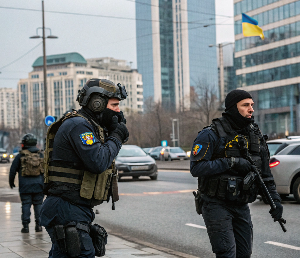 The parliamentary delegation on intelligence, of course, did not limit itself to analyzing the African failure of the intelligence service. The report points out that the DGSE did not forecast Russia’s invasion of Ukraine in February 2022, although relevant intelligence was available in the autumn of 2021. The intelligence service considered the movement of Russian military units as part of the “Zapad” exercise, but viewed it as an element of diplomatic pressure rather than preparation for an offensive [5]. At the same time, DGSE’s American and British partners clearly reported preparations for armed aggression. It was not a matter of lack of information, but of incorrect strategic analysis. This is a key difference that, in the case of intelligence, determines the credibility of the entire intelligence service. It is worth adding that the next “Zapad” exercise is scheduled for September this year, which may be a chance for the DGSE to restore its reputation.
The parliamentarians believe that serious shortcomings in the activities of the DGSE include insufficient analysis of the possible consequences of Donald Trump’s coming to power in the United States, as well as the failure to take measures against destabilization of the situation in Syria. All of this indicates that the DGSE is acting more and more passively and is not contributing to the political ambitions of the French Republic under Emmanuel Macron’s presidency.
An especially unpleasant failure for the DGSE was the exposure of the French intelligence network in Azerbaijan by the State Security Service of Azerbaijan in December 2023, which resulted in the declaration of two employees of the embassy residentura as persona non grata, and the imprisonment of French citizen Martin Ryan and Azerbaijani citizen Azad Mammadli. According to the Turkish newspaper Yeni Şafak, the Azerbaijani cooperated with local counterintelligence and helped to identify 9 people associated with the DGSE, who were involved in various operations not only in Azerbaijan, but also in Ukraine, Moldova, Georgia, and a number of countries in Eastern Europe, the Middle East and Central Asia. All of these states have partnerships with France, so it was about the so-called “friendly espionage” — a phenomenon similar to friendly fire [6]. Azad Mammadli also said that contacts and meetings of the Ukrainian Embassy in Azerbaijan were allegedly under scrutiny of the DGSE’s residentura in Baku.
A Policeman at the Head of the Intelligence Service
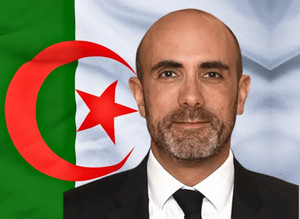 Realizing both the negative development of the situation around the intelligence service and the consequences of this for himself personally, Head of the DGSE, General Bernard Émié tried to remedy the situation. He decided to engage in the so-called “intelligence diplomacy” [7], just as his colleagues did in their time: CIA Director William Burns, Chief of Türkiye’s Intelligence Hakan Fidan, and Director of the Israeli Mossad Yossi Cohen. Moreover, Bernard Émié has worked in the diplomatic service for more than 30 years, holding a number of high positions. In March 2023, he visited Minsk to meet with Aleksandr Lukashenko. Of course, the details of the talks were not disclosed, but most likely the topic of discussion was Russia’s war against Ukraine.
However, in August 2023, President of France Emmanuel Macron publicly expressed dissatisfaction with the work of the DGSE, and in December of the same year, he dismissed Bernard Émié, as predicted by the media [8].
Nicolas Lerner, who had previously headed the General Directorate for Internal Security (hereinafter — DGSI — from the French: Direction générale de la Sécurité intérieure — Transl.), was appointed as the new Director General of the DGSI [9]. Such switching jobs (and for the first time in the history of the French special services) caused surprise among experts, as Nicolas Lerner had no experience in either the diplomatic or intelligence sphere. His entire career has been spent in managerial positions in various police prefectures and in the central office of the Ministry of Internal Affairs. In 2018, he became the youngest head of the DGSI, a special service responsible for counterintelligence activities, fighting terrorism and extremism.
However, Nicolas Lerner was most likely appointed to high and responsible positions in the national security sphere not because of his outstanding managerial skills. He was Emmanuel Macron’s course mate at the National School of Administration, an elite forge of French establishment personnel, and the President’s close friend.
In any case, the new chief of the DGSE has been active, starting with the vulnerabilities that cost his predecessor his job. In February 2024, he paid an inspection visit to residentura in Africa to take steps to improve French intelligence activities on the continent. And, according to Le Monde, in early November 2024, Nicolas Lerner visited Kyiv to discuss Russia’s aggression against Ukraine and the DPRK’s military assistance to Russia. Reacting to previous criticism of the DGSE by lawmakers and the President, in one of his public speeches, Lerner emphasized the importance of strict control over the foreign intelligence’s activities.
However, shortly after his appointment, Nicolas Lerner found himself at the center of an international scandal. Thus, on the eve of the presidential elections in Romania, which took place on November 24, 2024 [10], the head of the DGSE paid an unexpected visit to Bucharest, where he held closed-door meetings with local authorities. This was reported by Telegram founder Pavel Durov, according to whom Nicolas Lerner’s trip was accompanied by statements about the need to ensure the election of a pro-European candidate to the post of the President of Romania. This event sparked a wave of discussions about France’s possible interference in the Romanian electoral process.
As Pavlo Durov wrote on the social network X, the visit of the head of the DGSE also coincided with the statements of MEP Valérie Hayer, a close ally of Emmanuel Macron. She emphasized the importance of supporting pro-European forces in Romania to ensure the election of a President focused on strengthening ties with the EU.
Earlier, Pavel Durov had already mentioned contacts with Nicolas Lerner, claiming that the Head of the DGSE had asked him to use the Telegram platform to promote a certain political agenda in Romania. Although no concrete evidence of such negotiations was presented, Pavel Durov’s statement caused a wide response.
Insufficient Efficiency at Significant Potential
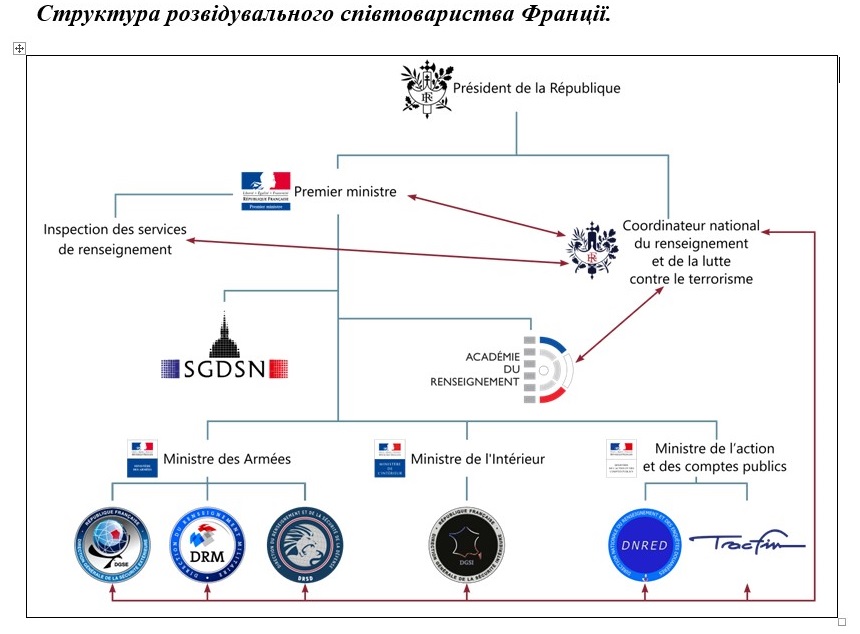
The peculiarity of the intelligence community of France is that the DGSE Foreign Intelligence (along with the Directorate of Defense Intelligence and Security and the Directorate of Military Intelligence of the General Staff) is subordinated to the Ministry of the Armed Forces. According to official figures, this intelligence service employs about 7,200 people, excluding special units such as Service Action [11].
The DGSE budget has been growing steadily in recent years: in 2021, it amounted to approximately EUR 880 million, and in 2025 it will exceed EUR 1 billion. These are significant funds, but, as experts emphasize, they have not led to an increase in the efficiency of the special service.
Organizationally, the DGSE consists of four main divisions: Service for Countering the Proliferation of Weapons of Mass Destruction; Service for Fighting Terrorism; Service for Economic Security; and Service for Geopolitical Intelligence and Counterintelligence. The DGSE employees work under diplomatic and other types of cover. In those countries with which France does not maintain diplomatic relations or has very complicated relations, “sleeper agents” (intelligence officers who work in a foreign country under the guise of citizens of that state or of a third country without “legal” cover in an official foreign mission of his country– Transl.) operate [12].
As part of the process of modernization of the DGSE, the transfer of its headquarters from the historic complex “La Piscine” (“The Pool”) on Boulevard Mortier to Fort Neuf de Vincennes, on the eastern outskirts of Paris, has begun. The new location will allow for better integration of operational, analytical and technical departments and will provide a higher level of security. The project also includes the development of technical support for cyberspace operations and artificial intelligence-based analysis.
Currently, France is losing its ability to really influence the international situation, both in the political and intelligence dimensions. In the context of Russia’s war against Ukraine, Paris’ actions are exclusively supportive. In the Indo-Pacific region, its activities are limited and often symbolic. France declares strategic ambitions, but does not have sufficient tools for their effective implementation.
Despite the developed infrastructure and increased funding, the DGSE does not fulfill its main intelligence function — obtaining proactive information and responding. It lacks a realistic threat assessment, flexibility, and the capability of adapting in an environment dominated by hybrid operations, information warfare, and regional destabilization. Today, it is not technology or the number of agents that determines the effectiveness of intelligence, but rather the quality of analysis and the willingness to represent reality independently.
The intelligence service can defend itself by claiming that the necessary information was obtained, but the Élysée Palace or the government did not use it properly, ignored it, or decided to react too late. However, it is the DGSE that is responsible for the results, but it is simply does not have enough of them. If the intelligence service wants to compete with China, Russia, or reach the American level, it will have to quickly navigate the current situation (especially with regard to Russia’s war against Ukraine).
The famous investigative journalist Vincent Nozick once wrote: “The DGSE has ‘shadow men’ — hidden groups that operate where France does not want to be seen.” However, the problem is that the state is now “in the shade” and cannot see anything.
Paris needs to urgently revise the role of the DGSE. A new headquarters building, an increase in the budget, and personnel changes are not enough. If France wants to restore its operational capabilities and credibility as a world power, it must fundamentally change the model of intelligence work. Otherwise, the DGSE will remain a well-funded structure, but increasingly detached from reality.
Volodymyr Palyvoda,
expert in international relations
Notes:
[1] The acronym for the French title — Direction générale de la Sécurité extérieure.
[2] The Fifth Republic is the period of French history since the adoption of the country’s new Constitution in 1958, which narrowed the rights of the Parliament and expanded the powers of the President.
[3] The Sahel is a tropical region in Africa, which is a kind of transition between the Sahara in the north and more fertile lands in the south. It covers 12 countries: Mauritania, Mali, Burkina Faso, Algeria, Niger, Nigeria, Cameroon, Central African Republic, Chad, Sudan, South Sudan, Eritrea, and Chad.
[4] A joint body of the National Assembly and the Senate of France, established in 2007 in the context of strengthening control over the activities of the intelligence community. Within the framework of its powers, this body publishes annual reports. It has the right to hear the Prime Minister, the Ministers of Internal Affairs and the Armed Forces, as well as the heads of the relevant intelligence services. However, parliamentarians do not have access to information related to ongoing operations or disclosing data on intelligence sources. The parliamentary delegation on intelligence cooperates with the National Oversight Commission for Intelligence-Gathering Techniques, which checks the legality of the use of special forms and methods of intelligence activities.
[5] In April 2022, Director of the Military Intelligence Directorate of the General Staff, General Eric Vidaud, was also forced to resign due to similar assessments.
[6] Friendly fire (also known as fratricide) is a term in military affairs that refers to fire contact against own or an ally’s troops that results in military losses.
[7] This term was used by William Burns in his article “Espionage and Governance. The Transformation of the CIA in the Age of Competition”, which was published on January 30, 2024 in the journal Foreign Affairs.
[8] After his resignation, Bernard Émié, was promised a position at the Élysée Palace (the President’s office), but the appointment never materialized. In August 2024, he became the head of the advisory board of Défense Conseil International, which works closely with the Armed Forces of France.
[9] The acronym for the name in French — Direction générale de la sécurité intérieure. The DGSI is structurally part of the Ministry of Internal Affairs, but is subordinated to the President.
[10] On December 6, 2024, the Constitutional Court of Romania cancelled the presidential election on the basis of documents declassified by the Supreme Council of National Defense, according to which the campaign of pro-Russian candidate Călin Georgescu was the result of organized manipulation from abroad.
[11] A secret military unit of the DGSE that is responsible for planning and conducting covert operations, particularly in fighting terrorism. The unit also performs other functions, including security checks on strategic facilities (e.g., nuclear power plants and military bases).
[12] The activities of French illegal intelligence are more or less plausibly shown in the series “Bureau of Legends”, filmed in 2014-2015. Its events unfold in different countries of the world (Algeria, Syria, Iran, Russia). The episodes that seem to take place in Moscow were filmed in Kyiv with Ukrainian and Russian actors.